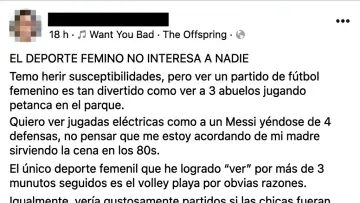
The recurring debate about public interest in women’s football is usually tainted from the outset by a fallacious premise: “People don’t watch it because it doesn’t interest them.” This circular argument ignores one of the fundamental laws of twenty-first-century mass communication: visibility is a direct product of structured scheduling and of the accessibility of the broadcast channel. If a Liga F match is broadcast across fragmented platforms, with no predictable fixed kick-off times or with deficient production quality, the casual viewer’s interest inevitably wanes.
Women’s football does not lack a potential following; it lacks stable windows of exposure and a serious, coordinated television commitment from broadcasters.
The paradox of pay platforms and free-to-air channels
Access to Liga F broadcasts has suffered constant comings and goings. The fragmentation of rights between paid streaming platforms and free-to-air public channels breeds confusion among supporters. While men’s matches enjoy consolidated time slots and massive media coverage of pre- and post-match analysis, women’s football is often scheduled as last-minute filler, overlapping with the kick-off times of the leading men’s teams.
Accessibility is the determining factor in winning the loyalty of new generations. If, in order to watch a women’s derby, the viewer must navigate three different apps or pay for additional subscriptions, the growth of the fan base is drastically curtailed.
Technical quality as respect for the viewer
The professionalism of broadcasts goes beyond the channel of transmission; it also encompasses the technical resources deployed. Watching a match filmed with a single fixed camera in a modest stand, with no replays of contentious incidents, conveys an unfair sense of amateurism that does not correspond to the athletic reality of the game in Liga F.
Investing in productions with multiple cameras, specialist commentators and real-time data analysis is not a superfluous expense, but an act of respect towards the viewer and a dignifying of the product. Women’s football deserves television production worthy of its growth, because only by giving quality to the image will women’s football be consolidated in the collective imagination of the footballing public.

_03.BxWsb19M_Z1hhudE.webp)