Alexia Putellas and Mapi León now play in England. So does Ona Batlle. Salma Paralluelo is at Lyon. Barcelona did not lose those four because they were beaten — they lost them having won everything there was to win.
Some teams change because they have stopped winning. Barcelona face something far more delicate: changing after winning the lot.
League, Copa de la Reina, Supercopa and Champions League. Last season ended with four trophies, 87 points out of 90 in Liga F and a goal difference bordering on absurd: 130 scored, 9 conceded. In Europe, a 4-0 win over OL Lyonnes sealed a fourth Champions League and a sixth consecutive final. It is hard to imagine a better starting point. It is also hard to imagine one that raises the stakes on every decision quite so much.
Barcelona will still be the overwhelming favourites in Spain and one of the teams to beat in Europe. But they will not be the same side. The departures of Putellas, León, Batlle and Paralluelo touch almost every layer of the team: leadership, playing out from the back, width and overlap from full-back, one-on-one threat and running in behind.
This is not a rebuild forced by failure. It is a generational handover, accelerated from the summit.
What has left does not fit on a list of departures
The confirmed first-team exits are Alexia Putellas and Mapi León, both to London City Lionesses; Ona Batlle to Arsenal; Salma Paralluelo to OL Lyonnes; Martine Fenger to Hoffenheim; and Txell Font to Badalona. Celia Segura, who belongs to the club’s development structure, extended until 2029 before going on loan to Atlético de Madrid. Giulia Dragoni also leaves the reserve side, in a transfer to Chelsea.
The hardest loss to measure is Putellas. She still contributed nine goals and seven assists in the league; in the Champions League she produced seven goals and seven assists in eleven matches and was named the competition’s best player. But the numbers only explain part of it. Barcelona lose a captain, an institutional figurehead and a footballer who could decide when to accelerate, when to settle the team around the opposition box and when to arrive as a second striker.
Mapi León leaves a different kind of hole. Her two goals and seven assists in the league reflect her attacking influence, but her importance began much earlier than that: she was one of the players chiefly responsible for breaking the first line of the press, either by carrying the ball or by passing through it. That reading is tactical rather than anything the coaching staff has said, but it explains why replacing her is not simply a matter of finding another left-footed centre-back.
Ona Batlle gave the team a full-back who could stay wide, come inside, progress with the ball and play on either flank. Paralluelo provided the threat that forces defences to turn and run towards their own goal. Her league season was quieter — six goals and five assists — but she finished it by scoring twice in the Champions League final. That her transfer took her to the very Lyon side that conceded those two goals adds a quirk to Barcelona’s summer: they have not only lost talent, they have strengthened several possible European rivals.
Between them, Putellas, León, Batlle and Paralluelo take 19 goals and 21 assists from last season’s league campaign with them. The squad retains enough output to absorb those numbers. The genuinely difficult part is replacing the roles, and the seniority, that sat behind them.
A transfer window to lower the age without lowering the ambition
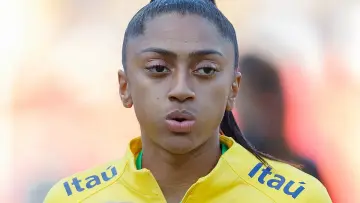
The marquee arrival is Kerolin Nicoli. The Brazilian joins from Manchester City on a deal until 2030. She can fill any of the three attacking positions, though she is at her most valuable receiving with space to run at defenders. She has acceleration, a change of direction and a natural feel for the one-on-one. She is not a like-for-like replacement for Paralluelo, but she does give Barcelona back some of the pace and unpredictability that left with her.
In defence, Martina Fernández returns after a spell at Everton; the club triggered its buy-back option and tied her down until 2029. She is joined by Renee van Asten, a 19-year-old Dutch centre-back from Ajax signed until 2030. Carla Julià steps up permanently to the first team, while Tyler McCamey completes the goalkeeping department alongside Cata Coll and Gemma Font.
These moves reveal the logic of the summer. Barcelona have not answered each departure with an established star of similar age and standing. They have chosen instead to bring the average age down, to bring academy graduates back, and to bet on players whose best years should still be ahead of them.
That strategy makes sense in the medium term. In the short term it leaves a less experienced defence. Laia Aleixandri, meanwhile, is still recovering from the serious knee injury she suffered in February. Irene Paredes and Marta Torrejón bring experience, but Pere Romeu will have to accelerate the development of Fernández, Van Asten, Carla Julià and Aïcha Cámara while competing for every trophy. The window is still open.
The rebuild was already inside the building
The transfer window alone does not explain how Barcelona intend to survive so many departures. The other half of the answer lies with the players who had already been earning their place.
Claudia Pina was last season’s top scorer in the league with 21 goals. Ewa Pajor added 16 and Caroline Graham Hansen finished with ten goals and ten assists. That front line alone brings finishing, creation and dribbling of the highest order.
Behind them come Vicky López and Kika Nazareth, both on ten goals and nine assists in the league; Sydney Schertenleib, who produced seven; and Clara Serrajordi, whose emergence was one of the stories of the season. Serrajordi ended up starting the Champions League final after beginning 25 of her 40 matches across all competitions. This was no decorative academy cameo: Barcelona genuinely needed her minutes to complete the sweep.
The succession, in other words, did not begin this summer. Vicky, Serrajordi, Schertenleib, Pina and Nazareth have all played in matches that mattered. What changes is the responsibility. Before, they could grow around Putellas, León, Batlle and Paralluelo. Now they have to occupy part of the space those four leave behind.
The centre of the dressing room changes too. Patri Guijarro is ready to take on an even greater share of the leadership, alongside Irene Paredes, Aitana Bonmatí, Graham Hansen, Cata Coll and Marta Torrejón. Barcelona are letting go of a historic generation, but they are not left short of footballers who are used to winning.
Three tactical questions
The starting shape will remain recognisable: a 4-3-3 built on heavy possession, a high press and constant occupation of the opposition half. The interesting doubts are not about the system but about who takes on particular jobs.
1. Who starts the move without Mapi León?
Her departure removes some of the fluency from the first phase of build-up. Paredes can direct things from the back and Brugts carries the ball from left-back, but Barcelona will need Fernández or Van Asten to grow quickly in possession. Another option is to involve Guijarro even more deeply, though dropping her too far back would pull her away from the zone where she screens turnovers and sustains attacks.
This is where the main European vulnerability may show. In Liga F, most opponents will sit close to their own box. Against the best sides on the continent, a well-executed press can put a young back line to the test.
2. Who inherits the left flank?
Pina starts with the advantage on form. She can play as a winger, a number eight or a number ten, and she is coming off 21 league goals. Kerolin offers a more direct version, while Schertenleib can attack space cutting in from outside. There need not be a single heir to Paralluelo: Pere Romeu can pick a more controlled left side with Pina or a more explosive one with Kerolin.
Brugts’s positioning will matter too. Her tendency to push forward and combine infield could work particularly well with an attacker who holds the touchline. If the winger leaves the flank early, the team will need the full-back to fill it.
3. Where do Putellas’s minutes go?
Bonmatí remains the great organiser in the final third, but she is coming off a season interrupted for months by a fractured fibula. Vicky can carry the ball and arrive late; Serrajordi offers continuity and positional understanding; Nazareth, creativity near the box; Pina, goals from midfield.
That allows for a more collective Barcelona. It also means sharing among several players what Putellas concentrated in one: command, the final pass, arriving in the box, set pieces and authority in difficult moments.
A provisional snapshot, not a settled XI
The second friendly, a 2-2 draw at Manchester City, has offered the most useful reference so far. Pere Romeu started with:
Cata Coll; Martina Fernández, Irene Paredes, Renee van Asten, Esmee Brugts; Vicky López, Patri Guijarro, Sydney Schertenleib; Caroline Graham Hansen, Ewa Pajor and Claudia Pina.
Graham Hansen and Vicky scored. That side should not be read as the definitive XI: Bonmatí and Kerolin were not yet fully integrated, August workloads were what they were, and there are still weeks of transfer business left. It does show some early preferences: Fernández at right-back, Van Asten going straight into the centre-back pairing, and Schertenleib getting minutes in midfield.
With everyone available, a maximum-seniority version might look closer to:
Cata Coll; Fernández or Cámara, Irene Paredes, Van Asten or Fernández, Brugts; Guijarro; Bonmatí and Vicky or Serrajordi; Graham Hansen, Pajor and Pina or Kerolin.
More than a prediction, that is a map of the places up for grabs. Goalkeeper, Guijarro, Bonmatí, Graham Hansen and Pajor look like the settled points. The real competition will be at right-back, alongside Paredes, for the third midfield slot and on the left wing.
How they arrive
Barcelona opened pre-season with a 3-1 win over Montpellier before that draw in Manchester. The first match showed the depth of the squad; the second offered a good opening half and more trouble after the rotations. The Joan Gamper Trophy against Brighton is the last significant rehearsal before the league starts.
The season begins at home against Tenerife and continues with a trip to Sevilla. Nazareth is carrying a muscle problem and could miss that opening, while managing Bonmatí and Aleixandri’s recovery will both require caution.
This does not look like a team that will struggle to create chances. It keeps the league’s top scorer, one of the best centre-forwards in the world, Graham Hansen, Bonmatí and several young players already producing serious numbers. The doubts sit slightly further back: playing out under pressure, the coordination of a rebuilt defence, and the response when a European night turns physical and scrappy.
What can fairly be asked of them
In Liga F, any prediction that does not make Barcelona clear favourites would be a stretch. The gap they showed last season remains enormous and the attacking talent is still far above the level of the division.
The Champions League is a different examination. Barcelona remain among the leading candidates, but Arsenal, Chelsea, OL Lyonnes and London City themselves have all added talent — in some cases straight from Barcelona. Repeating the sweep would be a feat, not the minimum bar by which to judge the season.
The real measure of this campaign may not be a trophy count at all. It may be whether the team can change its leaders and its spine without losing its competitive identity.
Barcelona are not starting from zero. They are starting from a hundred, and they need to find a different way of staying there. That is the difficulty of rebuilding from the summit: everything new gets compared with a team that left almost nothing unwon.