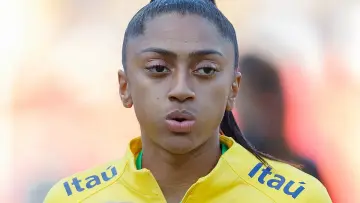
Madrid CFF have announced five signings in three days. Their summer departures now number eleven.
The gap explains why their transfer window is still far from complete, but it also reveals a recognisable way of building the team.
Romane Lejeune, Emilie Holt, Kate Taylor and Débora Bebê are aged between 19 and 22. Their footballing backgrounds span France, Denmark, New Zealand and Brazil. They arrive at different stages of their development but share one characteristic: they still have room to grow in Liga F.
Ana González partly breaks the pattern. The midfielder, born in 1995, returns after two seasons with Badalona Women and provides experience that the other arrivals cannot yet offer.
The provisional result is a rebuild based primarily on young players, although not necessarily inexperienced ones.
Taylor is 22, arrives after two seasons at Dijon, competed at the Paris Olympics and has earned 32 senior caps for New Zealand. Lejeune, 21, helped Lens win promotion and has already played in the French top flight. Holt made her European debut at 16, while Bebê progressed from Botafogo’s under-20 side to Brazil’s first division.
They did not emerge from Madrid CFF’s academy, but the thinking is similar: identify players with room to develop and give them the opportunity to take another step.
Two routes to talent
Madrid CFF already have one of the largest academy systems in Spanish women’s football, which Vicky López, Cristina Librán and Sandra Villafañe all came through.
However, the commitment to youth extends beyond the Madrid-based academy.
The first team have also provided a platform for players arriving from elsewhere. Geyse Ferreira and Kerolin began their Spanish careers at Madrid CFF, while Racheal Kundananji joined after one season with Eibar. All three moved on to clubs with greater financial resources: Geyse to Barcelona and Kerolin to the NWSL, where she was later named the league’s best player.
The five arrivals announced this week have once again broadened the club’s recruitment. Madrid CFF have signed players from three foreign leagues — two from France, at Dijon and Lens, plus Brøndby in Denmark and Botafogo in Brazil — with González the only addition from another Spanish team.
The deals do not all follow the same pattern and most of their terms remain undisclosed. The club have not announced the length of their new players’ contracts or explained the basis of Holt’s arrival, having been announced by Brøndby as under contract until 2028.
There is therefore not enough evidence to describe this as an established strategy of buying players to sell them later.
What can be observed is a tendency to recruit footballers whose best years may still be ahead of them.
Kundananji showed the potential reward
Racheal Kundananji provides the clearest example of Madrid CFF creating value through player development.
The forward joined in 2022, scored 25 goals during her first Liga F season and was transferred to Bay FC in February 2024. The American club reportedly paid €735,000 plus potential add-ons, making it the most expensive transfer in women’s football at the time.
The deal demonstrated the potential financial return from identifying a player before she became one of the game’s most sought-after forwards.
But it remains an exceptional case. One record transfer is not sufficient evidence to conclude that player sales regularly sustain Madrid CFF.
Departures that bring in nothing are the other side of the model: the club have announced no fee for any of the eleven. Five stayed in Liga F — Bárbara López at Granada, Allegra Poljak at Atlético Madrid, Esther Laborde at Real Sociedad, Anita at Espanyol and Nerea Sánchez at Eibar — another five went abroad, with Freja Olofsson, Hildur Antonsdóttir, Núria Mendoza, Kamilla Melgård and Natasha Andonova spread across Italy, England, Portugal and Switzerland, and Natalia Serrano signed for Villarreal in Primera Federación.
Developing talent guarantees neither retaining a player nor receiving a fee when she leaves.
Building again
Madrid CFF finished ninth last season and will begin the new campaign with José Luis Sánchez Vera, who took charge in January.
The squad remains incomplete, particularly in attack, and five arrivals do not yet offset eleven departures. The transfer window remains open and the rebuild will continue over the coming weeks.
What has been announced so far nevertheless reflects a recognisable idea.
Madrid CFF are an independent club without the backing of a major men’s football operation. They are attempting to compete by developing their own players and offering young talent from other leagues another opportunity to progress. Some will stay, others will leave without generating a fee and, occasionally, a deal such as Kundananji’s will produce an extraordinary return.
Rather than a proven model of buying low and selling high, it is a sporting response to the club’s circumstances: find talent before others, give it room to develop and be prepared to start again.