The first tournament that could be affected by the dispute between UEFA and FIFA is not several years away. It begins in just over five weeks and is a Women’s World Cup.
FIFA unveiled its plan to create FIFA Forward Enterprise on Tuesday. On Thursday, UEFA announced, in a statement issued on behalf of its 55 national associations, that none of its national teams would participate in competitions organised by FIFA while the proposal remained alive.
The decision places the FIFA Under-20 Women’s World Cup in Poland, scheduled for 5 to 27 September, under immediate uncertainty.
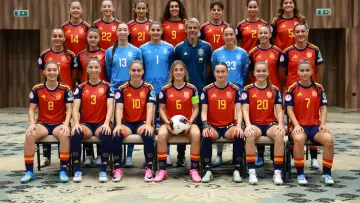
Spain have qualified and are due to begin their campaign against Nigeria on 7 September. They are then scheduled to face New Caledonia on 10 September and China three days later. Hosts Poland, England, France, Italy and Portugal are the other five European teams in the tournament.
This does not mean the competition has been cancelled or that Spain have formally announced their withdrawal. The schedule remains in place and the Spanish Football Federation continues to list all three matches on its official website.
However, the positions currently communicated by UEFA and FIFA are incompatible.
European football’s governing body said its national teams would not compete in any FIFA tournament while the proposal remained on the table. For that position to change, UEFA is demanding that the project be abandoned completely and that FIFA provide binding assurances that it will never open its governance or competitions to private ownership.
Opposition to the project is not confined to Europe. Concacaf also rejected the proposal in a statement issued on behalf of its 41 member associations, although it did not announce a boycott of FIFA competitions. The Asian Football Confederation later expressed solidarity with the concerns raised by UEFA and Concacaf. Together, UEFA and Concacaf represent 96 of FIFA’s 211 member associations.
What FIFA is proposing
FIFA Forward Enterprise would be a new subsidiary company bringing together FIFA’s commercial activities — including broadcast rights, sponsorship, ticketing and licensing — with the operational delivery of its tournaments.
FIFA says it would retain permanent ownership and control of the company, as well as sole authority over competitions, the international match calendar and sporting decisions.
The project envisages raising up to $4.2 billion from external investors through minority, non-controlling stakes. The operation rests on an implied valuation of $20 billion.
That investment would finance a new one-off programme, called FIFA Fast Forward, through which each association could receive a single payment of up to $20 million for infrastructure and other development projects. Participation would be voluntary and would depend on FIFA Forward Enterprise being established.
Separately, FIFA says the new structure would allow it to increase the regular funding provided to its 211 member associations. Each would receive $20 million during the 2027-2030 cycle, compared with the $8 million currently budgeted.
Taken together, the two programmes could provide each association with up to $40 million during the 2027-2030 cycle.
FIFA has clarified that this regular funding would be distributed regardless of each association’s position on the proposal.
The project has not yet been approved. It requires the support of a majority of FIFA’s 211 member associations and the relevant authorisations from the FIFA Council.
It also has a deadline. According to a letter from Gianni Infantino to the member associations, seen by The Associated Press, the one-off programme will be available only to those that decide to participate by 19 September. The deadline would fall with the Under-20 World Cup already under way — six days after Spain’s third group match.
That same letter qualifies the assurance above. The independence FIFA promises refers to how each association votes individually: if the proposal does not go through, regular funding for the cycle would stand at $10 million per association.
FIFA keeps the proposal open
Following UEFA’s announcement, FIFA argued on Friday that it was not selling football and said the new subsidiary would remain under its ownership and control.
It also described the project as the starting point of a consultation process that could still result in its approval, amendment or rejection.
That response does not amount to the withdrawal demanded by UEFA. For now, the proposal remains active and the European boycott remains in place.
If neither side changes its position, the first sporting consequence could arrive in September. Before the dispute reaches the senior Women’s World Cup in Brazil in 2027 — and even before the Under-17 World Cup that Morocco hosts from 17 October — it could prevent Spain’s Under-20 team from competing in Poland as scheduled.