Real Madrid are not replacing players one by one.
They could not do so even if they wanted to.
Caroline Weir has no exact replica. Neither does Teresa Abelleira. Misa Rodríguez, Rocío Gálvez and Naomie Feller each represented different phases, roles and ways of understanding the club’s growth. The six confirmed departures this summer have left gaps in goal, defence, midfield and attack. But above all, they have brought an end to a significant part of the structure on which Madrid had been built over recent seasons.
The response has not been to look for six copies. The club have signed Elisa Senß, Andreia Jacinto and Lineth Beerensteyn, while Laia López steps up from the academy. Four moves that share a common idea: increase the team’s tempo, physicality and variety without abandoning a commitment to players who still have room to grow.
This does not look like a transfer window designed to rebuild the past. It looks like one designed to build something different.
The foundation: Caicedo until 2031
Before analysing the signings, it is worth establishing what everything else is being built upon.
Linda Caicedo has renewed until 2031. At 23 years old, after another season confirming she is one of the best players in the world, the Colombian forward is the axis around which Pau Quesada is designing the project. Maëlle Lakrar, renewed until 2028, provides continuity from defence. Without those two decisions, Madrid’s transfer window would look very different. With them, the reconstruction has a solid foundation.
The departures that demand a rethink
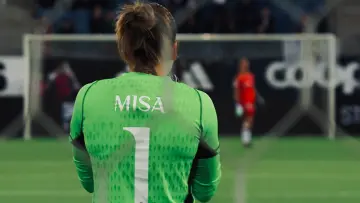
The most symbolic departure is Misa Rodríguez. The captain ends six seasons at the club and leaves as a free agent. This is not simply a change in goal — it is the end of a cycle. The player who most embodied the identity of the project is leaving without the club having announced an external signing to cover her position.
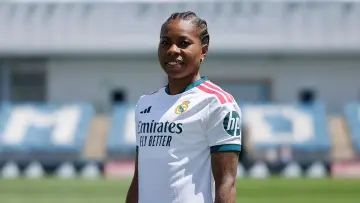
In midfield, the blow is twofold. Caroline Weir — the club’s all-time top scorer — and Teresa Abelleira leave together, the latter after six seasons and 170 appearances. Weir was the most creative player in the squad; Abelleira was the engine. Losing both at once demands a complete rethink of how Madrid will build their play.
Naomie Feller, Yasmim Ribeiro and Rocío Gálvez complete the list of departures. These are not minor losses. The club is losing leadership, institutional knowledge and accumulated experience that cannot be replaced by signings alone.
Elisa Senß: the midfield starts by not breaking down
The first signing was Elisa Senß, a German international who joins until 2030 from Eintracht Frankfurt.
Senß does not arrive to fill Weir’s creative role. Her importance comes earlier in the game. She is a midfielder accustomed to organising the team from deep, winning second balls and protecting interior spaces so that those ahead of her receive the ball with more freedom. Her contribution is not always visible in the final pass — it is often better understood by watching where she wins the ball back, or which zone stops becoming exposed.
Madrid have had seasons where their midfield produced brilliant moments but stretched too easily. When they lost possession, the defenders were left protecting too much ground. Senß can reduce that gap. Her bronze medal with Germany at the Paris Olympics is part of his CV. But her value to Madrid will be measured in balance.
Andreia Jacinto: a midfielder who already knows the Liga F
Three days later came Andreia Jacinto, who signs until 2030 after four seasons at Real Sociedad in San Sebastián.
Unlike Senß, she will not need to discover the competition. She arrived in Spain at twenty and leaves the Basque Country a considerably more complete midfielder: capable of participating in the build-up, driving forward to break a first line of pressure, and arriving higher up the pitch to link with the forwards. She is not a direct replacement for Abelleira, but she can take on some of the responsibilities her departure leaves: moving into interior pockets, helping the ball progress and maintaining possession when the game tightens.
The Senß-Andreia partnership allows you to imagine a midfield less reliant on a single organiser. One holds, the other advances, and both can coexist with Sara Däbritz, Filippa Angeldahl, Hanna Bennison or Sandie Toletti depending on the structure Quesada chooses. Madrid have not simply signed two central midfielders. They have increased their available combinations.
You might also like: El falso nueve también habla en femenino
Lineth Beerensteyn: running is also a way of creating
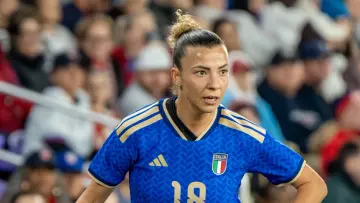
The third signing changes the nature of the attack. Beerensteyn joins until 2029 from Wolfsburg. She won the European Championship with the Netherlands in 2017 and was the Bundesliga’s top scorer in her first season in Germany.
Her game offers something recognisable from the very first movement: pace. She can start from a wide position, attack the space between centre-back and full-back, or receive closer to the penalty area. She does not need a move to be fully constructed before becoming dangerous — she can turn a turnover or a vertical pass into a chance before the opposition has time to organise.
Madrid already have players capable of creating imbalance, particularly Linda Caicedo and Athenea del Castillo. But during certain spells last season the team depended too heavily on one of them breaking the game open through individual action. Beerensteyn adds another threat: she can free up space for Caicedo, attack the opposite flank when Athenea receives the ball wide, or support a central reference. She does not replace Feller exactly, but she occupies part of the space her departure leaves.
Laia López: the academy stops being decoration
The fourth move does not come from abroad. Laia López steps up to the first team on a contract until 2030.
The goalkeeper, born in 2007, joined Real Madrid in 2022, progressed through the youth teams and the B side, and made her first-team debut in May 2025. She has also won the European Championship at under-17 and under-19 level with Spain. Merle Frohms remains the most experienced goalkeeper at the club; alongside her, Laia takes up a permanent place in the first-team squad.
Her promotion matters beyond the goalkeeping position. Madrid have been investing in their women’s academy for several seasons, but an academy cannot prove its worth purely by winning youth competitions. It needs to demonstrate that a real pathway to the first team exists. Laia is evidence that it does.
What may still arrive
The defence continues to raise questions. Rocío’s departure reduces the experienced options at centre-back; Yasmim’s exit removes a left-back. The club can adapt positions or call on the academy, but another signing in that area would not be surprising.
Noe Bejarano is a candidate to join Laia in stepping up from the B team. And one name could make this transfer window considerably bigger: Felicia Schröder. Sportbladet have reported Real Madrid as the leading candidate to sign the 19-year-old BK Häcken forward, describing the deal as close. For now it remains a rumour — but it fits the strategy the club has followed since signing Caicedo: identify young talent before the price multiplies.
You might also like: Vicky López ya no va a ser nada · Liga F Transfer Market 2026/27 Arrivals & Departures
Fewer replacements, more functions
The instinct when looking at the departures is to draw equivalences: Senß for Abelleira, Andreia for Weir, Beerensteyn for Feller, Laia for Misa. But the market does not work that cleanly.
Senß is not Abelleira. Andreia is not Weir. Beerensteyn is not Feller. Laia is only beginning a career that Misa built over six seasons. Real Madrid are not replacing identical pieces: they are redistributing functions. They are looking for more balance at the base, more driving ability in midfield, more depth in attack and a direct route from the academy to the first team.
That may produce a more complete team. It may also require time. Because signing talent does not by itself resolve the loss of the automatisms and leadership that six significant departures leave behind. Players such as Athenea del Castillo, Linda Caicedo, María Méndez and Filippa Angeldahl will need to take on more responsibility — both sporting and emotional — than ever before.
Real Madrid have spent several seasons closing the gap on Barcelona. They have reduced the difference and made it possible to imagine competing with the champions on more equal terms. But closing the gap can no longer be the permanent objective. The 2026/27 squad must turn that progress into a genuine and sustained challenge for titles.
Senß, Andreia and Beerensteyn are not arriving at a project in its infancy. They are joining one that has already outgrown the argument of institutional youth. Real Madrid have shifted their centre of gravity. Now they must prove that moving it also means taking the next step.
Sources: Real Madrid CF — official announcements · Eintracht Frankfurt — official announcements · Real Sociedad — official announcements · VfL Wolfsburg — official announcements · Sportbladet — Felicia Schröder · AS — Liga F transfer market