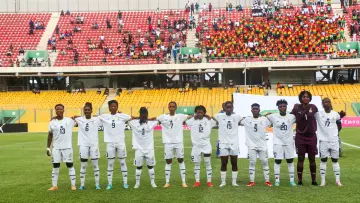
South Africa beat Nigeria 2-1 at the Moulay Rachid Stadium in Casablanca and moved into the 2027 World Cup intercontinental play-off. Nigeria are out of the road to Brazil.
They won with five fewer shots than their opponents, a third of the big chances and a quarter of the touches in the opposition box.
No World Cup place was at stake. Africa had already awarded its four direct places — Morocco, Cameroon, Algeria and Malawi, for reaching the semi-finals — and this round did not hand out any either. The winners enter FIFA’s intercontinental tournament: ten teams and three places, with the African sides in the first phase in November and December, from which only two of six go through.
South Africa will keep trying. Nigeria will not.
Nigeria produced more than double the expected goals and lost
The balance of chances does not resemble the scoreline. Nigeria accumulated 2.51 expected goals to South Africa’s 1.12 and created six big chances to two. They had seventeen shots, twelve of them from inside the box; South Africa had twelve, and only five from inside. They also hit the woodwork.
The territorial gap is wider still: twenty-eight touches in the South African box to seven in Nigeria’s. Four times as many.
The first half had run the other way and produced nothing either. South Africa had 61% of the ball, moved it at 84% accuracy — the best figure of the match — and did not enter Nigeria’s box once: all three of their shots came from outside. Nigeria had five attempts and put none of them on target. It reached the interval 0-0, with 0.58 expected goals between them.
Everything happened afterwards.
South Africa’s two goals came in twenty-one minutes
Nigeria’s head coach, Justine Madugu, had taken Asisat Oshoala off on 55 minutes. A minute later, South Africa scored.
Thembi Kgatlana finished for 1-0 after a pass from Hildah Magaia. Kgatlana had three shots in the whole match and all three were on target.
Captain Refiloe Jane made it 2-0 on 77 minutes, from a position worth barely 0.09 expected goals: the kind of shot that almost never goes in.
Oshoala had gone to the bench after four attempts worth 0.75 expected goals between them: the most any player accumulated without scoring. Michelle Alozie had five shots, more than anyone on the pitch, and did not score either.
The captain scored, then was sent off
On 90+3, Refiloe Jane was sent off and Nigeria were awarded a penalty from the same passage of play. Christy Ucheibe converted it.
Jane finished the match with a goal, a yellow card from the 28th minute and a red. It was the only dismissal of the game, which also produced three bookings, two of them Nigerian.
The 2-1 came far too late to change anything.
The two goalkeepers explain the rest
Kaylin Swart made five saves and prevented 0.90 goals: she conceded almost one fewer than the shots she faced suggested she would.
Chiamaka Nnadozie made four and ended with 1.20 goals conceded above expectation, almost all of it in a second half in which South Africa had nine shots and scored twice.
The player who assisted the opening goal lost her club in June
Hildah Magaia started, played until the 88th minute and assisted the goal that opened the scoring. She spent last season in Liga F, with Deportivo Abanca.
Magaia has no club: she left Deportivo on 30 June when her contract expired, and has been a free agent since. She left Casablanca with an assist and without a team.
The first absence
Nigeria have never missed a Women’s World Cup. They are the only African side who can say so, and they stop being able to say it in 2027.
They reached this play-off after losing their quarter-final to Cameroon, the round that handed out the direct places. They leave Morocco without the title they were defending and with no route left to Brazil.
South Africa, continental champions in 2022, will have to win two more ties — one in December and another in February — to get there.
The tournament bracket closes on Sunday with the final between Cameroon and Malawi.