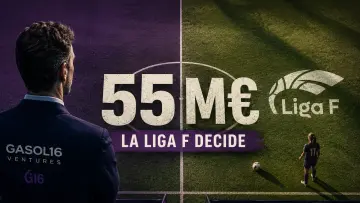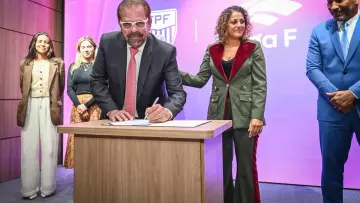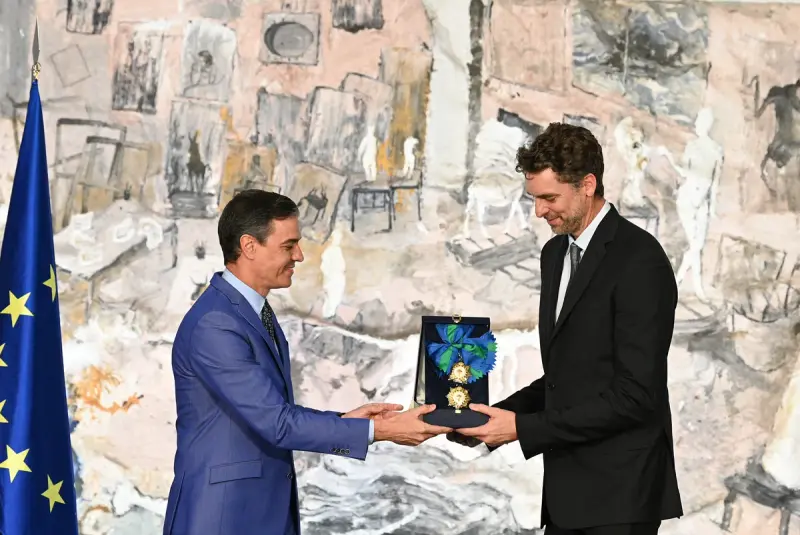
The news has shaken the foundations of Spanish women’s soccer: Pau Gasol, through his firm Gasol16 Ventures, has presented a €55 million proposal to take over the management and development of Liga F’s commercial rights. The decision will be made in an Extraordinary Club Assembly on June 29, 2026.
At first glance, the figure is dizzying. If approved, it would be the largest private investment ever made in a women’s soccer league in the world — as Liga F itself defines it. But in modern elite sports, money is only fuel; what is truly revolutionary about the proposal is the engine it brings. And, it is worth saying now, also the moment it arrives: just when the players run out of their collective agreement.
Beyond the check: the philosophy of Smart Capital
In recent years, women’s sports have seen several funds land, attracted by their growth potential. But not all investments are equal. Gasol16 Ventures’ proposal falls under what is known as Smart Capital: capital that comes accompanied by knowledge and a network of contacts.
Gasol does not arrive just to finance budgets. His differential value lies in three assets that no traditional fund matches:
- Institutional reputation. He is one of the most respected athletes in the history of Spain and a member of the International Olympic Committee’s Athletes’ Commission since 2021. His presence clears commercial mistrust.
- The “NBA stamp”. After nearly two decades at the peak of American sports marketing, he knows firsthand how a global entertainment brand is built, how sponsors are retained, and how matchday is exploited.
- Independence. In an ecosystem often burdened by tensions between institutions, a consensus figure brings stability to the league’s governance.
It is important to emphasise that this is not the checkbook of a former athlete wanting to help. Gasol16 Ventures is an investment vehicle founded in 2023, based in Barcelona, which expects a return. Gasol himself has acknowledged that he was inspired by how Kobe Bryant or Magic Johnson turned their careers into a second life as investors. It is a business thesis, not a charitable cause. And that distinction, far from detracting, is the best news for women’s sports.
The American mirror: Gasol’s investment trajectory
To understand what Gasol16 can do in Spain, basta look at his track record in the US ecosystem:
| Competition / Project | Type of investment | Gasol’s role | Impact |
|---|---|---|---|
| WNBA (US basketball) | Co-investor in historic $75M round | International ambassador and commercial liaison | The largest capital increase in the history of a women’s sports property |
| Bay FC (NWSL, US soccer) | Investor | Commercial and brand connector in California | Attendance record for a debutant club |
| Overtime | Investor | Development advisor and young talent recruiter | Digital media reference for Generation Z |
The pattern reads itself: women’s basketball, women’s soccer in the US, and now women’s soccer in Spain. It is not an investor who lands in women’s sports for fashion or a photo. It is someone who has been building a thesis for years: that women’s sports are undervalued and that there is business there. That is, exactly the opposite of treating it as a niche.
The big dilemma: how does it fit with LaLiga?
The path to June 29 is not without technical debate. Liga F has maintained an agreement since 2022 by which LaLiga exploits its commercial and sponsorship rights, with a guaranteed minimum of 42 million euros over five seasons. It is worth pointing out a nuance that is often overlooked: that contract covers commercial and sponsorship, not audiovisual rights, which went to a separate tender.
The nuance is precisely the crux of the matter, because commercial is the territory that Gasol16 wants. That is to say, the proposal directly treads on the active contract with LaLiga. That is why the challenge for the 16 clubs is not just to say yes or no to 55 million, but to resolve the transition: do both models coexist during the final season of the current contract? Is an exit negotiated to give immediate entry to Gasol16? What seems clear is that Liga F is already planning its post-2027 future, seeking a leap in quality and independence in the management of its assets.
The counterpoint: money coming in, agreement expiring
Here the story gets complicated, and FemGol cannot look the other way. The investment is voted on June 29. Just one day later, on June 30, the Second Collective Bargaining Agreement of First Division women’s soccer players expires. The Second Agreement entered into force on July 1, 2024, and was denounced by AFE in March 2026; the negotiation of the Third is open and tangled, with union representation disputed in court.
Thus, in the same week, two narratives coexist that are hard to fit together. On one hand, private capital knocking on the door with a historic record. On the other, the working conditions of the players unresolved, pending a judicialized negotiation. The uncomfortable question formulates itself: what is the use of “professionalising the commercial model” if the labour floor of those who make the show — minimum salaries, hours, maternity leave — remains up in the air?
This does not make the investment suspicious. It makes it an opportunity with conditions. If the 55 million arrive while the collective agreement is signed downwards or drag on in mediation, the message would be devastating: there is money to internationalize the brand, but not to ensure the players’ livelihood. If, on the other hand, the entry of capital coincides with a Third Collective Bargaining Agreement that shields and improves rights, then indeed we would be facing the leap that women’s soccer has been demanding for years.
The real impact on clubs and players
How would all this translate onto the pitch? Beyond the direct economic distribution to the clubs (facilities, stadiums, medical staff), the proposal opens the door to an ecosystem of innovation and health. Gasol16’s portfolio includes leaders in sports tech like Therabody (muscle recovery), Oura (performance and sleep), or Indya (sports nutrition). Integrating these tools league-wide could democratize access to elite preparation, allowing the most modest clubs to have performance resources close to those of Barça or Real Madrid.
It is, again, the other side of the same argument: the check only matters if it reaches the dressing room.
Conclusion: a historic opportunity, with fine print
Liga F is at a crossroads. Maintaining the current model gives some stability; Gasol’s proposal invites to think big: allying with one of the most prestigious personal brands in world sports to open the international market, attract global sponsors, and equip the competition with a modern commercial structure.
That a firm with a thesis, international portfolio, and vocation of return puts the largest private investment in the history of women’s soccer on Liga F confirms something we at FemGol have been defending for a long time: women’s sports is not a cause that needs charity, it is a market that generates value. It is not “by and for women”. It is soccer, and as such, it is invested in.
But that same logic forces the circle to close. If women’s sports is already business enough to attract 55 million, it is also enough to pay decently those who sustain it. On June 29, the clubs will decide if Liga F dares to lead European women’s soccer. The operation will be good news the day that assembly and the next day’s collective agreement stop being told as two separate stories. For now, they are two dates stuck together on the calendar pointing in different directions. Anyone who wants to understand where Liga F is heading will have to look at both.