The first major professional women’s football league in the United States had money, World Cup winners, television coverage and the momentum of a World Cup final attended by more than 90,000 people.
It also had a plan.
The Women’s United Soccer Association expected to spend around $40 million over five years. At the time, it appeared to have every ingredient that inspires optimism in Spain today: talent, international success, exposure and capital.
Three seasons later, the league was gone.
By then, it had burned through more than $100 million. Average attendance had fallen from 8,116 in its first season to 6,667 in its third, and the competition had secured only two major national sponsors.
It did not disappear because it lacked money. It disappeared after receiving it.
The WUSA spent as though the market had already been built. It paid for a professional competition, created an organisation and produced a spectacle, but failed to generate the business required to sustain them. The capital ran out before revenue could replace it.
You can have money to burn and still get everything badly wrong.
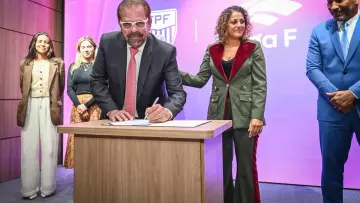
That is the first lesson worth remembering now that Liga F has approved a €55 million investment from Gasol16 Ventures and Fortified Partners over the next four seasons. The competition describes it as the largest private investment ever received by a women’s football league.
The agreement could transform Liga F.
It could also finance four more expensive seasons without changing anything.
The difference will lie in what remains once the €55 million is gone.
The problem is no longer survival
Liga F is not starting from nothing.
Over four seasons, it has built its own organisation, centralised revenue, attracted sponsors and reached a cumulative television audience of 7.5 million viewers in 2025/26.
Professionalisation has brought stability to a competition that previously had no independent structure. Public support, cooperation with the Spanish Football Federation and the agency agreement with LaLiga were essential in getting it this far.
But that phase always had an expiry date.
During the presentation of the agreement, Beatriz Álvarez explained that the time had come to move beyond those initial forms of support, create an in-house commercial department, sell the product directly and help the clubs advance in their professionalisation.
It was an important admission.
Liga F has built a professional competition. What it has not yet finished building is the market required to sustain it.
Too many matches are still played in front of small crowds. Its clubs possess vastly different commercial and organisational capabilities. The central structure still needs to develop muscle of its own, while the success of the national team, its players and its biggest clubs does not always translate into stable interest throughout the season.
The problem is no longer making sure Liga F exists.
It is making sure Liga F operates as a league.
The clubs are not the league
The NBA is one of the largest sports businesses in the world. It has global brands, enormous broadcasting contracts, packed arenas and franchises valued in the billions.
Even so, it does not expect every team to work out for itself how to sell tickets, attract sponsors or understand its supporters.
Its Team Marketing and Business Operations department, known as TMBO, works with teams from the NBA, WNBA, G League and NBA 2K League in areas including ticketing, commercial partnerships, marketing, digital development, fan experience and data analysis. The central office gathers expertise and makes it available to the franchises.
The lesson is not that Liga F should copy the NBA.
It is that even a competition operating at an incomparably higher level considers it necessary to centralise expertise, information and best practices.
The teams compete on the court. Away from it, they cooperate to increase the value of the business they share.
That model demands a degree of centralisation that has always generated resistance in Spanish football.
The most powerful clubs have their own commercial departments, millions of followers, stadiums, sponsors and international brands. They may believe they contribute more than the others, that they could negotiate better agreements alone or that sharing their assets strengthens their competitors.
From an individual perspective, they may be right.
But a competition cannot be organised solely around what benefits its two or three strongest members.
Liga F will not survive as a collection of independent sections that happen to meet for 30 matchdays each year. It can only survive as a league.
Barcelona can fill a large stadium. Real Madrid can sell its crest. Athletic Club can mobilise a historic identity. But Liga F also needs a Tenerife–Eibar, an Espanyol–Granada and a newly promoted team’s home match to have value.
It needs to sell a season, not three fixtures.
To do that, the smaller clubs need tools to attract supporters and sponsors. They also need to showcase their players and build stories that allow the competition to be recognised beyond its biggest clubs.
FemGol was born, in part, from a very simple experience: trying to follow Liga F as a supporter and discovering how difficult it was to find enough information about many of its protagonists.
Men’s football understood decades ago that a competition does not sell results alone. It sells players, rivalries, careers and stories.
Liga F has still shown only a fraction of that product.
Collective strength is not charity from the largest clubs towards the smallest. It is everyone’s business.
Without strong opponents, there are worse matches. Without a recognisable competition, broadcasting rights are worth less. Without a common product, it becomes harder to attract sponsors willing to pay throughout the year. And without collective revenue, every women’s section remains exposed to the financial priorities of its own club.
That is why the most interesting part of the Gasol16 agreement may not be the figure.
Liga F intends to invest in matchday experience, sporting performance, digital growth, commercial development, infrastructure, organisational structure and human resources. It has also announced programmes tailored to the needs of each club, with targets and monitoring.
That is not simply distributing money.
It is an attempt to build a league.
The WNBA built its foundations before its moment arrived
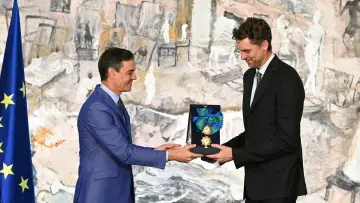
Pau Gasol has already taken part in another investment of this kind.
In 2022, he joined the investor group behind the WNBA’s first capital raise. The league announced that the money would be used to strengthen its brand and marketing, develop digital products, increase direct contact with supporters, expand internationally, recruit staff and create new sources of revenue.
It did not devote the capital solely to covering the costs of the following seasons.
It used it to improve its ability to benefit from future growth.
Then came a generation of players capable of changing the scale of the competition. It would be absurd to attribute the entire WNBA boom to that investment. The stars, college basketball, television and the wider cultural moment were all decisive.
But when the opportunity arrived, the league was better prepared to turn attention into crowds, content, sponsors and business.
Liga F has already experienced several waves that should have transformed its market.
Spain won the World Cup. Its players have collected successive Ballon d’Or awards. Barcelona became a European powerhouse. Some matches filled major stadiums. Audiences continue to grow.
Yet much of that attention still comes in spikes. It arrives with a tournament, a final or a clásico and then subsides.
The Gasol16 investment can help ensure that the next wave does not end with nothing more than an attractive audience figure.
It can leave behind season-ticket holders, databases, digital products, renewed sponsors and footballers who are recognised beyond the biggest occasions.
It can build the machine before the moment returns.
The market is built city by city
Centralisation does not mean controlling everything from Madrid or turning the clubs into branches without identities of their own.
The league must bring together expertise, data, standards and negotiating power. The clubs must turn them into crowds, communities and local business.
Bay FC provides one example.
The San Francisco Bay Area club sold all 18,000 tickets for its first home match. In its inaugural season, it averaged more than 13,000 spectators, attracted almost 10,000 season-ticket holders, secured 14 sponsors and led the NWSL in merchandise sales, according to figures published by the club. It also worked with more than 75 community organisations across the region and announced plans for its own training centre.
Bay FC does not prove that Liga F can reproduce those figures. California has a different economy, a different sporting culture and a different league model.
It demonstrates something simpler: a local market does not appear merely because a team has been placed on a pitch.
You have to find the audience, understand it, sell tickets to it, offer it an experience, produce content, build an identity and establish relationships with local businesses.
Liga F can gain followers nationally while many of its clubs continue to play in front of small crowds. It can multiply digital views without knowing who is behind them. It can open a major stadium once a year without persuading the audience to return two weeks later.
Gasol16 has identified matchday experience and the individual development of clubs as priority areas.
It is the right path.
But execution will have to be adapted to each location. Barcelona does not need the same things as Tenerife. What works in Bilbao will not necessarily work in Madrid. An independent club does not possess the same tools as a women’s section operating within a major men’s organisation.
Centralising expertise does not mean applying the same formula everywhere.
It means ensuring that 16 organisations do not have to invent it alone.
Money only buys an opportunity
Gasol16 is not a sponsor paying to place its logo somewhere, nor is it a public institution subsidising the existence of the competition.
It is a partner.
Its investment makes sense if Liga F grows, generates more revenue and increases in value. Pau Gasol has explained that his team intends to contribute experience, international contacts and knowledge from other sporting projects, rather than arriving to tell the competition how everything should be done.
That alignment is a strength.
But money does not do the work.
The €55 million can hire specialists, create tools, build departments, improve facilities, attract crowds and develop new products.
It can also dissolve into everyday expenditure, isolated campaigns, oversized structures and projects that nobody will be able to sustain once the four seasons are over.
The question is not whether the investment is large enough.
The WUSA has already answered that.
The question is whether Liga F and its clubs will agree to use it to build the common product on which their collective future depends.
To achieve that, the strongest clubs will have to accept that not everything can be negotiated separately. The less-resourced clubs will have to use the investment to build capabilities, not merely to pay bills. And the central organisation will have to prove that it can demand results, share expertise and make decisions with the entire competition in mind.
In four years’ time, it will not matter how much money was distributed or how many campaigns were launched.
What will matter is what continues to work once the money has run out.
If Liga F is left with better-prepared clubs, regular crowds, professionals capable of selling the competition, recognisable footballers and a central structure that continues to help the whole league grow, Gasol16 will have given it the push it needed.
If everyone uses the money to protect their own territory, the millions will disappear as well.
And this time, nobody will be able to say they were not warned.