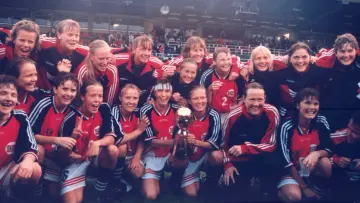
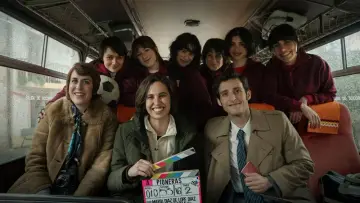
In 2023, eleven Spanish footballers lifted the World Cup in Sydney. To understand the magnitude of that moment, you have to go back more than a century and travel a road of prohibitions, clandestine matches and women who played even though almost everything around them told them they could not.
Women’s football in Spain is almost as old as the men’s game. The first documented team was the Spanish Girls Club, founded in Barcelona, which played its first matches in 1914. Those pioneers played amid the curiosity and mockery of a society that could not conceive of a woman chasing a ball.
The great brake came with Franco’s regime. Women’s physical activity was placed under the control of the Sección Femenina, which considered football improper for them. For much of the twentieth century, women were, in practice, barred from a sport reserved as male territory, on the argument that it was harmful to their health and contrary to public morality.
In the late sixties and early seventies, with the dictatorship in its final stretch, women’s football reappeared. The symbolic milestone came on 21 February 1971, when a Spanish national side played its first international match — still unofficial — against Portugal at La Condomina in Murcia. It finished 3-3. The Sección Femenina itself went so far as to oppose the match being held at all.
The change of regime opened the door. In 1983, after years of struggle, the Royal Spanish Football Federation took on women’s football and officially created the national team. Five years later, in the 1988-89 season, the first national league kicked off. It would change name and format over time, but at last there was a stable structure in which to compete. Sporting and international growth reached a milestone with Spain’s qualification for their first World Cup at Canada 2015, led and captained by Vero Boquete, whose demands for professional improvements upon their return planted the seed of change.
The decisive leap was a labour matter before it was a sporting one. In 2020 the first collective agreement in women’s football was signed, and in 2022 the league was recognised as a professional competition, giving rise to the current Liga F. For the first time, playing football stopped being a passion paid for with a second job.
And then came the summit. At the 2023 World Cup, Spain won the final against England 1-0 with a goal from captain Olga Carmona. The triumph was, however, tarnished by the non-consensual kiss from the then federation president, Luis Rubiales, on the player Jenni Hermoso. What should have been a celebration became a social turning point under the slogan “Se acabó” — “It’s over”, a movement that transcended sport and forced profound changes in the federation.
Since then the pace has not let up: a first appearance in a European Championship final in 2025, record audiences and a consolidated Liga F. The sport that for decades people tried to ban is today one of the fastest-growing phenomena in the country. The world champions of 2023 are the heirs of the pioneers of 1914. And the match, at last, plays on.