The mud was not a metaphor.
On 8 December 1970, sleet had fallen over Madrid, and the pitch at the Boetticher workers’ estate in Villaverde was little more than a stretch of wet sand in a working-class district on the city’s edge. Entry cost 25 pesetas. On the pitch, Sizam faced Mercacredit. Several thousand people ended up gathering in the stands.
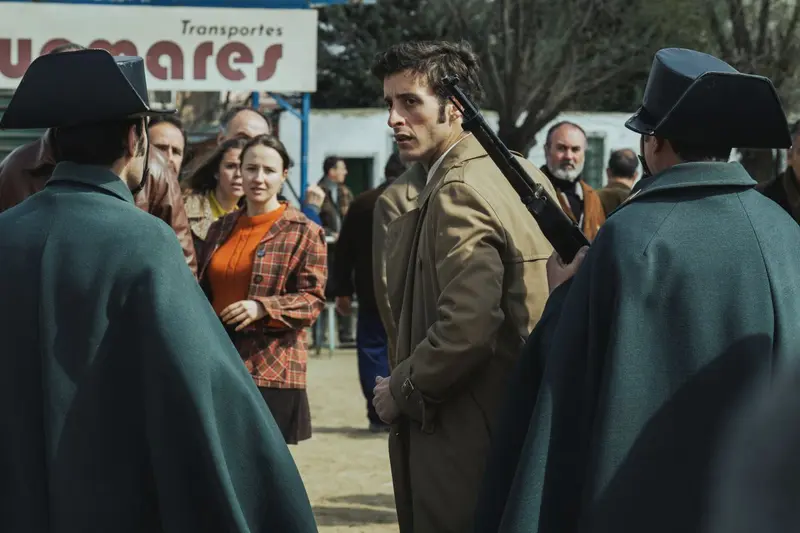
Sizam won 5-1. All five goals were scored by a 13-year-old named Concepción Sánchez Freire, whom the newspaper Marca would rechristen Conchi Amancio for her resemblance to the Real Madrid star: a good dribble and even better vision. When the match ended, as the crowd invaded the pitch and the players were escorted off, two Civil Guard officers asked the match organiser to accompany them to the station.
The scene seems written for a film. More than half a century later, a film has decided to begin right there.
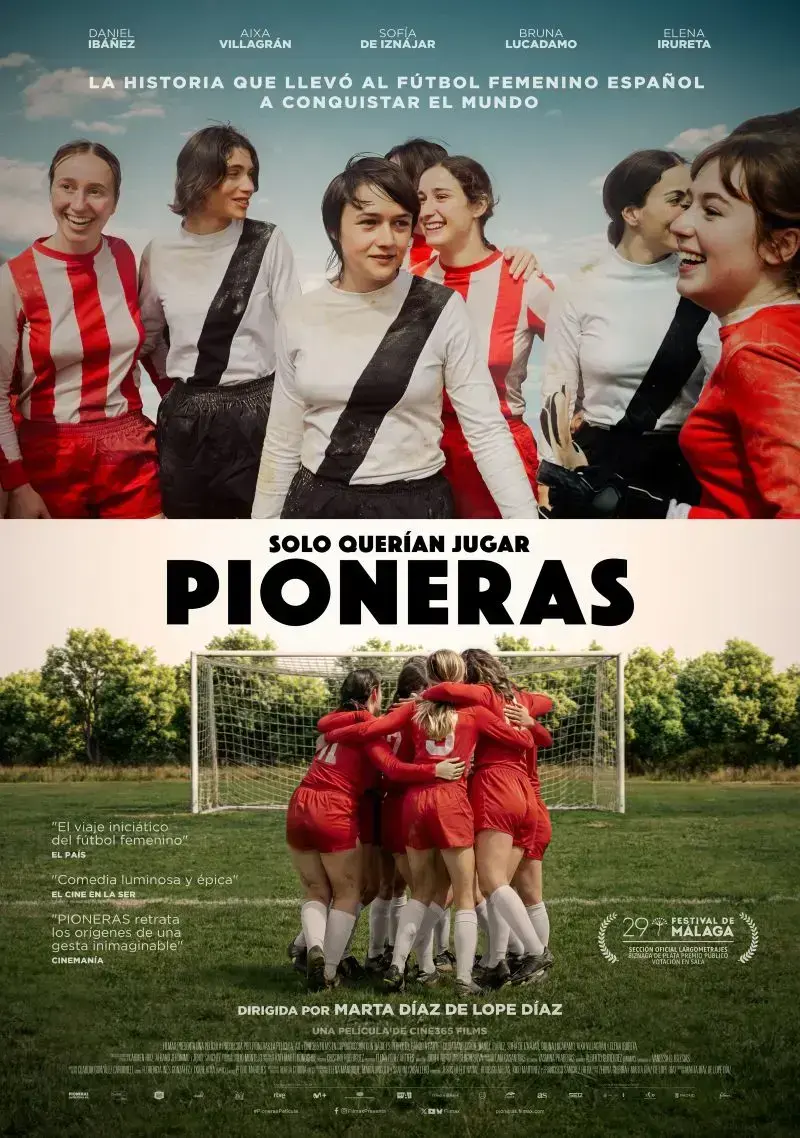
Pioneras. Solo querían jugar (“They just wanted to play”), directed by Marta Díaz de Lope Díaz (Mi querida cofradía, Los buenos modales) and co-written with Zebina Guerra, reaches Spanish cinemas on 12 June, distributed by Filmax. The feature, a 106-minute Spanish-Portuguese co-production, won the Silver Biznaga Audience Award at the Málaga Film Festival and was later selected for the Guadalajara International Film Festival (FICG) in Mexico ahead of its commercial release.
It is not a documentary. Nor does it claim to reconstruct every detail with notarial precision. It is a fiction inspired by real events that takes that Villaverde match as its starting point and follows a group of very young women who wanted to play football in a country still debating whether they should have the right to do so.
That verb — to want — matters more than it seems.
A desire too simple for an era too narrow
The film’s title could be read as a way of playing down the conflict. They did not aspire to become symbols. They were not drafting a manifesto, nor did they yet know that anyone would call them pioneers. They just wanted to play.
But that is precisely where the political dimension of the story lies.
In the Spain of the early seventies, under a dictatorship that still assigned women a subordinate place within the family and society, running after a ball could become an uncomfortable gesture. Football was not merely a sport. It was one of the public spaces where masculinity performed itself most naturally. To enter it was to trespass on territory many considered reserved.
The protagonists of this story were girls from working-class neighbourhoods. Some finished their working day and then went to train on precarious pitches full of puddles and potholes. They exposed themselves to the stares, the insults and the judgement of those who believed a woman playing football was doing something improper for her sex.
They did not need to consider themselves revolutionaries for their presence to be revolutionary.
The story did not begin from nothing
A clarification is needed here, one that popular memory tends to erase whenever it needs a simple narrative: Spanish women’s football was not literally born in Villaverde in 1970.
There are documented precedents from much earlier. In June 1914, the Spanish Girl’s Club organised a match in Barcelona between two sides named Montserrat and Giralda. Those footballers also faced the incomprehension and contempt of a society that considered football incompatible with femininity.
What happened at the Boetticher pitch more than half a century later was something else: a huge public event, capable of drawing thousands of spectators and pushing open a new era. The match between Sizam and Mercacredit was not an isolated episode. It was one of the moments that made it possible to assemble teams, fill grounds and build a women’s national team that the federation still refused to recognise.
On 21 February 1971, that team played a match against Portugal at La Condomina in Murcia, with Conchi Amancio as its first captain. Spain would not officially recognise its women’s national team until 1983.
Twelve years between playing and existing on paper.
That void is part of the story too, and we have travelled the whole of it in our brief history of women’s football in Spain.
The risk of telling a women’s story through a man’s eyes
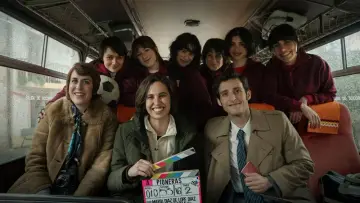
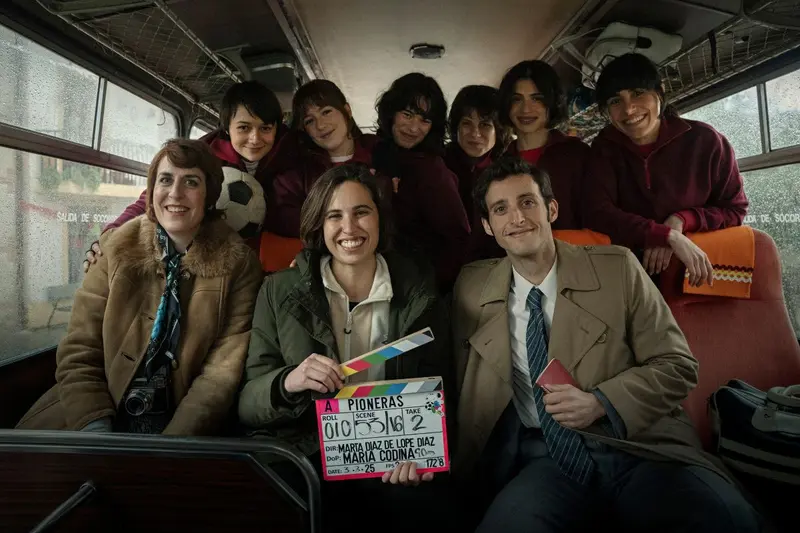
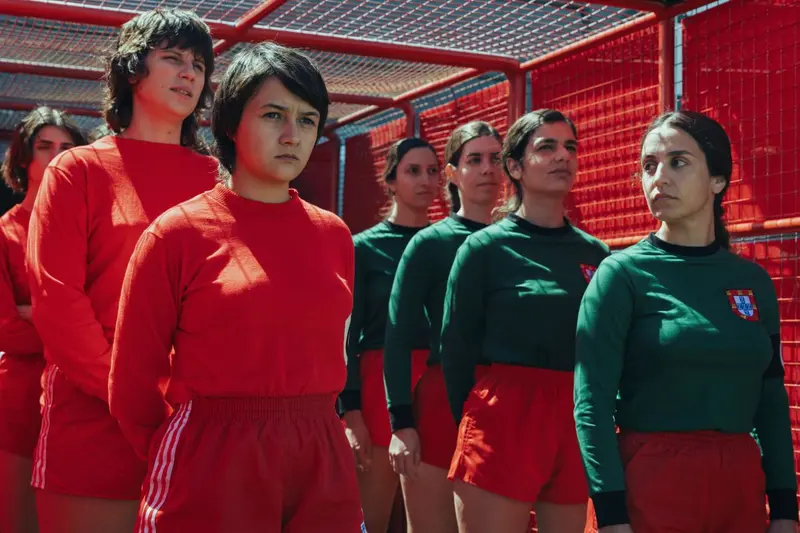
The film uses Javier Poga, played by Daniel Ibáñez, as its connecting thread: a sports promoter inspired by Rafael Muga, an essential figure in organising that match and in driving the first teams of the era. The cast also includes Aixa Villagrán as Edelmira, a sports journalist writing under a male pseudonym, and Sofía de Iznájar and Bruna Lucadamo as Nati and Belén, two of the young footballers at the centre of the plot.
Rafael Muga’s historical importance is not in question. Without his work, many of those matches would probably never have happened, or would have taken far longer to happen. Acknowledging the allies takes no merit away from the protagonists.
But the narrative choice raises a legitimate question.
Women’s stories have too often been told through the man who saw them before anyone else did: the coach, the discoverer, the journalist, the promoter or the executive who decided to give them a chance. The risk appears when the story ends up celebrating the man’s foresight more than the will of those who had to face the consequences.
Pioneras will have to prove that Poga works as a way into the story, not as its owner.
Because the decisive gesture was not organising a women’s football match. The decisive gesture was walking onto the pitch.
Kubalita and Quilla: the voice of the pioneers on TV today
The legacy of these pioneers has once again entered the public conversation. Carmen Arce ‘Kubalita’ (the legendary goalkeeper of that first unofficial 1971 national team) and María Ángeles Pérez ‘Quilla’ recently appeared on the hit TV show La Revuelta on TVE (hosted by David Broncano). Speaking to millions of viewers, the former players recalled with humour and dignity what it was like to be 14 years old in 1970s Spain and want to play football despite the bans and the dictatorship.
"We had to get changed in open fields and play illegal matches," recalled Carmen Arce. Their words not only amused and moved the studio audience but also reminded viewers that the struggle for Spanish women’s football did not begin with the recent World Cup trophies of Aitana Bonmatí or Alexia Putellas, but in the mud, with injuries uncovered by insurance, and against the official hostility that they had to fight firsthand.
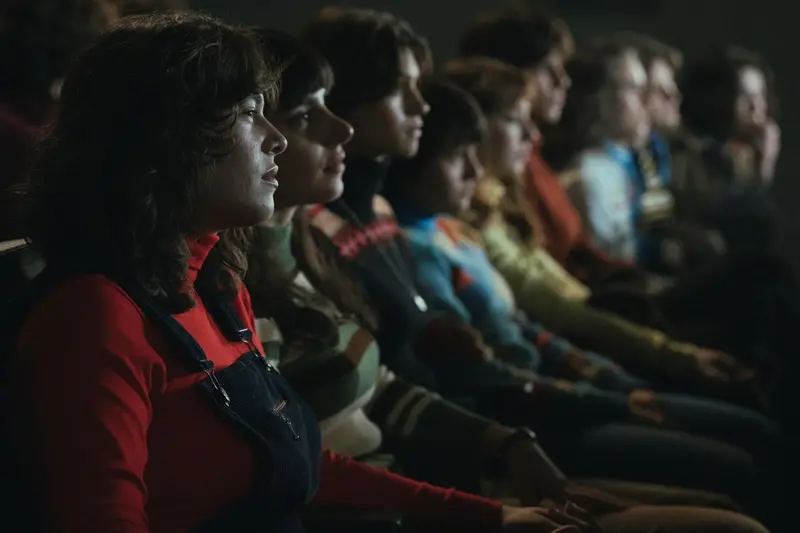
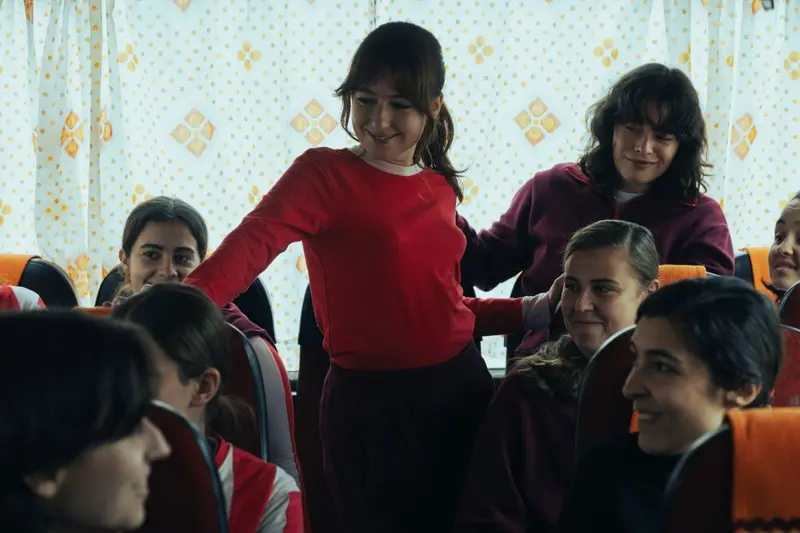
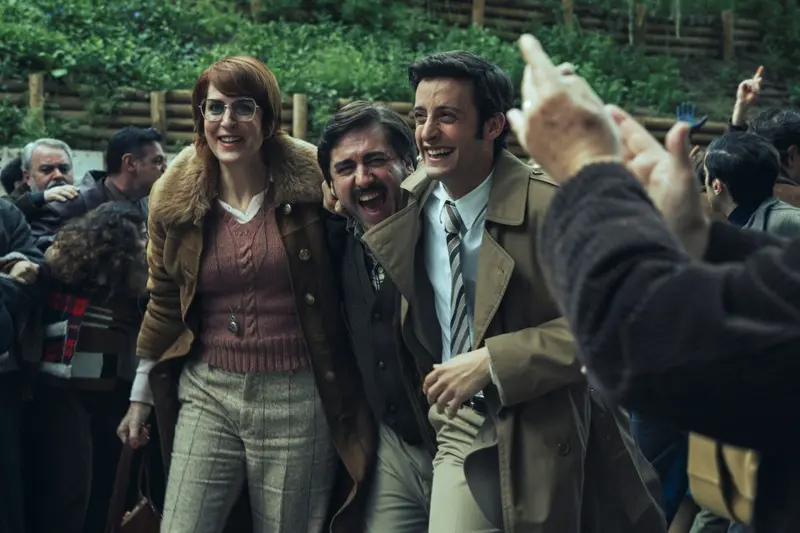
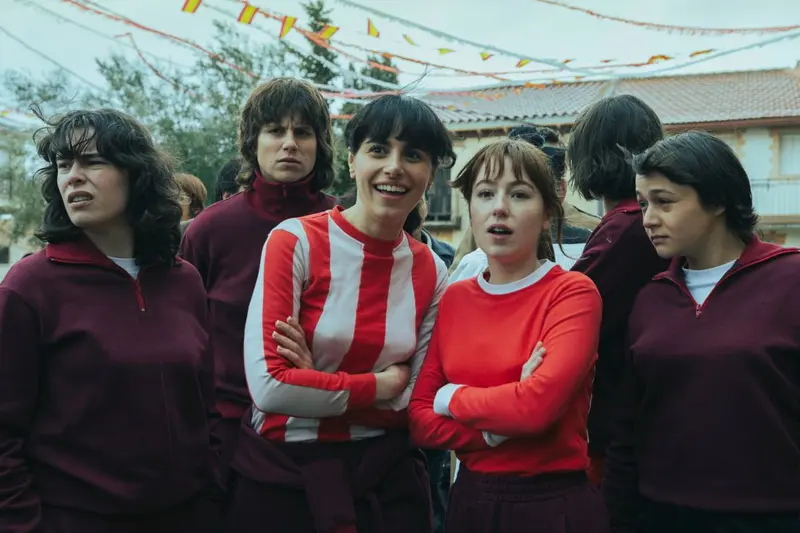
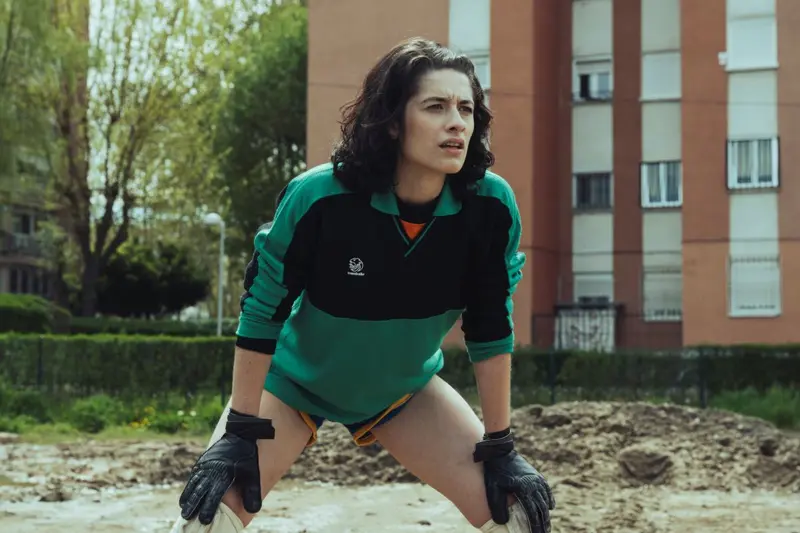
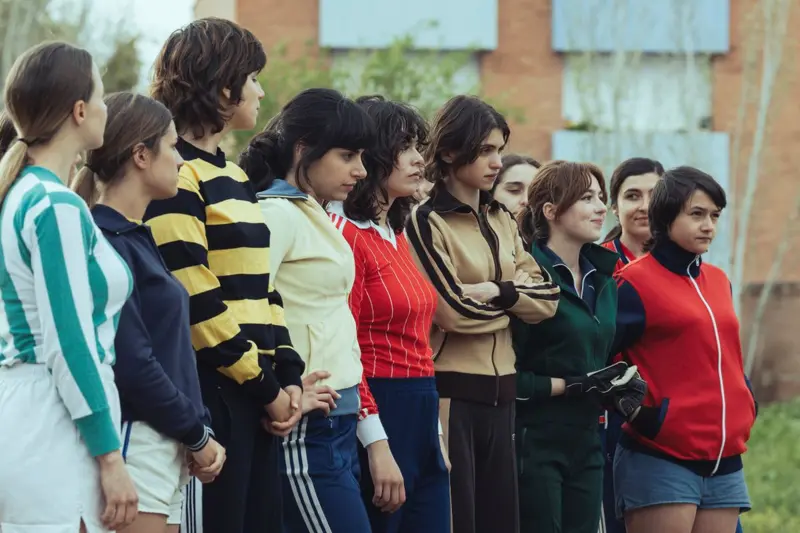
Official stills gallery


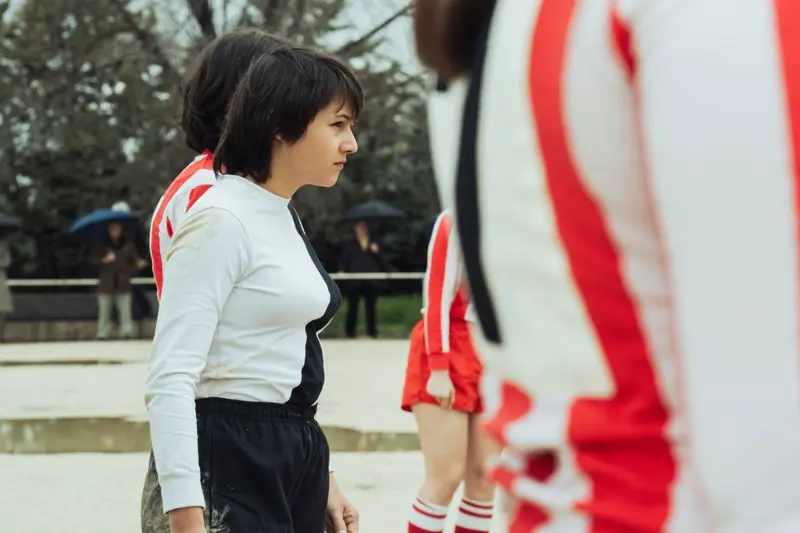
From “marimacho” to battle cry
The film’s campaign includes an original song composed and performed by Zahara: Marimacho. The choice is not ornamental.
For decades, that slur — the Spanish word flung at women deemed unfeminine — served to brand those who disobeyed the limits assigned to their gender. Girls who preferred the ball to other games learned very early that the punishment was not only sporting. Their bodies, their femininity, their sexuality and, ultimately, their right to occupy certain spaces were all called into question.
Zahara turns the insult into a cry of reclamation. The move is not new, but it fits a film about exactly that: women who find a form of freedom on the very pitch where others sought to humiliate them.
Past and present are not identical. Nor are they entirely separate.
Today there are professional footballers, recognisable role models, an established competition and a world champion national team. Thousands of girls can sign up for a team without feeling they are defying the natural order of things. It would be absurd to deny the depth of the change. And it is telling that the film’s collaborators include Liga F itself, the professional competition those pioneers made possible.
It would be equally naive to present the story as a triumphal march without setbacks, inequalities or unfinished battles.
Memory does not need saints
Pioneras. Solo querían jugar arrives in cinemas after winning the Audience Award in Málaga. The first published reviews have praised its power to move and its blend of drama, comedy and sports cinema. Some have also pointed out limits: an ensemble structure that is hard to sustain, characters that could use more development, and certain commonplaces typical of underdog stories.
There is no contradiction in that.
A film can be necessary without being untouchable. It can recover a silenced story and, at the same time, be examined as a work of cinema. It can move audiences without being exempt from questions. In fact, a story about women who were treated with condescension for years deserves better than an indulgent reception.
Before even seeing it, there is something the film has already achieved: placing before the public a story that should never have remained in the margins.
For too long, the story of Spanish women’s football has been told as if it appeared out of nowhere when the audiences, the big stadiums and the international titles arrived. As if nothing had existed before the spotlights. As if the mud did not count.
But long before football wanted to look at them, they were already there.
Playing.