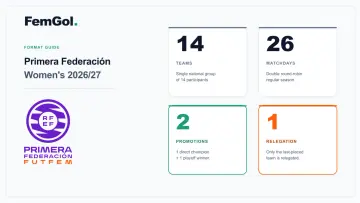
The Cantabrian coast and the Chartered Community of Navarre have historically and structurally been one of the most stable engines of Spanish women’s football. The capacity to develop competitive players from the grassroots is particularly evident in the 2026/27 Primera Federación. In this second tier, CA Osasuna Femenino’s first team shares the stage with highly prestigious youth development setups: Athletic Club B and Real Sociedad B. Three neighbouring clubs with consolidated academy models that constantly supply the national top flights.
For Osasuna, the competition represents a double challenge. On one hand, seeking sporting consolidation and safety in a highly demanding national league. On the other, sustaining their philosophy of local development at the Tajonar facilities. Manager Roberto Pérez relies on a squad designed around the club’s identity, where the internal promotion of reserve players is not an emergency resource, but the spine of the project.
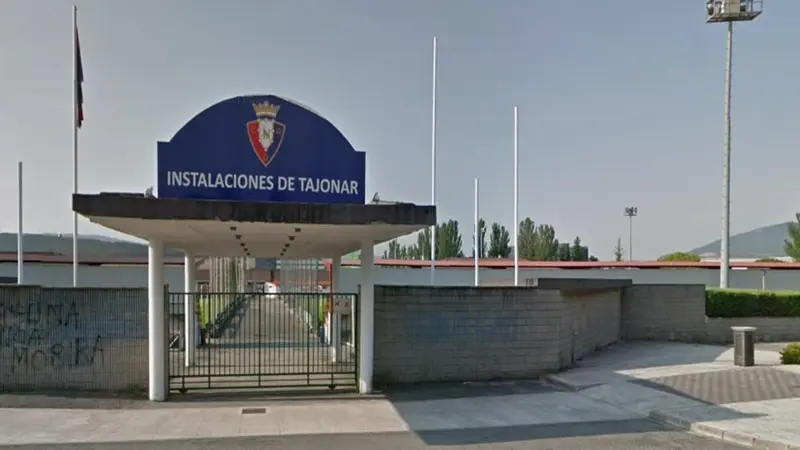
Tajonar, the factory of rojillo talent
The start of the pre-season has certified the viability of the Osasuna development model. In the first team’s plans for the 2026/27 season are young players trained in the Navarrese grassroots, such as Saioa Churruca and Ane Ansa. Their integration into the dynamics and matchday squads of the Primera Federación team proves that the path through Tajonar continues to offer real opportunities for local players.
Churruca and Ansa are the vanguard of an academy structure that stands out for its solidity. Unlike other projects that turn to international markets to reinforce their squads against competitive demands, Osasuna prefers to consolidate a block that knows the club’s values, contributing a highly characteristic competitive spirit that translates into a strong connection with their supporters at the Tajonar training ground.
Athletic B and Real Sociedad B: training in the modest elite
Osasuna’s developmental approach meets head-to-head in the silver tier with the two strongest reserve sides from the neighbouring region. Real Sociedad B and Athletic Club B compete under a different purpose to the rojillos: preparing their youngest players against mature, professional rivals, ensuring they are ready to make the definitive jump to Liga F.
In both Lezama and Zubieta, work with the grassroots is a historical priority. The presence of their respective reserve teams in the national second tier offers their prospects an accelerated course in competitive maturity that cannot be obtained in regional categories. Osasuna, although competing with its first team, shares that same philosophy of promoting home-grown talent and establishing a sustainable long-term model.
This confluence of northern projects in Primera Federación guarantees a high level of tactical and physical commitment. Navarre and the Basque Country continue to prove that their grassroots methodology is capable not only of supplying their own clubs, but of projecting talent to the entire national structure. In an exceptional season that will serve as a bridge to the expansion of the category, the quiet brilliance of Tajonar, Lezama, and Zubieta promises to keep bearing fruit in the modest elite of Spanish women’s football.