There are no more permutations, calculations or matches left to put things right at the Women’s Under-19 EURO. There are three games left.
Spain face Sweden on Tuesday, before Germany take on Austria. On Friday, the two survivors will meet in Sarajevo to decide the title. Four teams remain, but the question has remained unchanged for too long: who can bring Spain’s dominance to an end?
Spain have won each of the last four editions. They were champions in 2022, 2023, 2024 and 2025, after the tournaments scheduled for 2020 and 2021 were cancelled because of the pandemic.
None of the players who began that run could have remained for all of it in an age-restricted competition. Squads have changed, champions have moved on and new players have taken their places. The outcome, however, has always been the same.
That is what makes Spain’s achievement so unusual. Club dynasties can keep squads together, renew contracts and build around their best players. At under-19 level, turnover is unavoidable. Spain have not kept one title-winning team intact: they have turned winning into something each new generation inherits.
In Bosnia and Herzegovina, that habit is now two matches away from becoming another trophy.
What remains at the Women’s Under-19 EURO
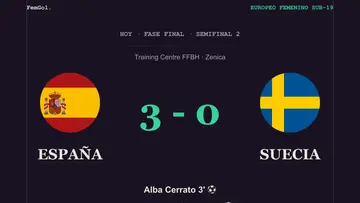
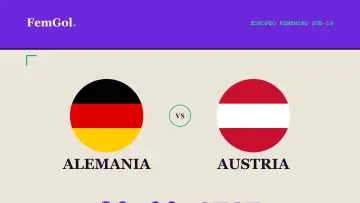
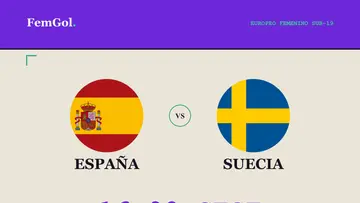
The semi-finals will be played on Tuesday 7 July. Spain and Sweden meet at 16:00 at the Bosnia and Herzegovina FA Training Centre in Zenica. Germany face Austria at 20:00 at Grbavica Stadium in Sarajevo.
The final will take place at Grbavica on Friday 10 July at 18:00.
There will be no third-place play-off. By Tuesday night, only the final will matter.
Spain–Sweden: where it all began
Sweden are no ordinary opponents in Spain’s recent history. Before Spain turned this tournament into their personal property, Sweden were one of the teams that taught them how hard it was to win it.
The Swedes defeated Spain in the finals of 2012 and 2015. On both occasions, Spain reached the showpiece only to suffer the same fate. Sweden lifted the trophy twice before Spain had learned to win it with any regularity.
The dynamic shifted in 2022. Spain beat Sweden 1-0 in the semi-finals before going on to take the title. That victory was not just another win: it started the run of four consecutive championships that still stands today.
Four years later, Sweden return to the same stage of the tournament, with the chance to close the circle they helped open.
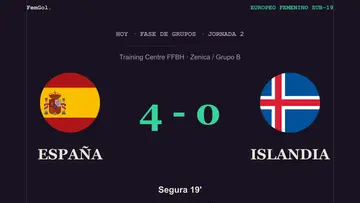
Spain arrive unbeaten, but they have not had an easy ride. They drew with Switzerland, beat Iceland comfortably and had to defeat Austria in their final group match to qualify as group winners and reach an 11th consecutive semi-final.
Sweden won their opening two matches to secure qualification with a game to spare. Their 2-0 defeat by Germany was less telling than the scoreline suggested: they rested players, gave minutes to all 20 squad members and played much of the match with 10 players.
Now they face the team against whom the run they wish to end began.
Spain are trying to keep a sequence alive that started against Sweden. Sweden want to end it in the very same fixture.
Germany–Austria: the former rulers against the newcomers
Germany have won six Under-19 EURO titles. Austria have never previously reached a semi-final.
For years, almost every record in the competition belonged to Germany. They won six titles, reached four other finals and made their presence in the latter stages a matter of routine.
But they have not lifted the trophy since 2011, and in 2025 they failed to qualify for the final tournament for the first time in 11 editions. In their absence, Spain won their seventh title, reached a 12th final and took over the position from which the history of the tournament was written.
Now the two giants are back in the semi-finals and could meet again in the final, as they did in 2023.
Germany have reached the last four having conceded just once. They beat Bosnia and Herzegovina, drew in the rain against Poland and defeated Sweden to top Group A.
They have returned by reclaiming something more recognizable than an individual star: the sense of being a team that is difficult to break down.
Austria have no such history. They are writing it now.
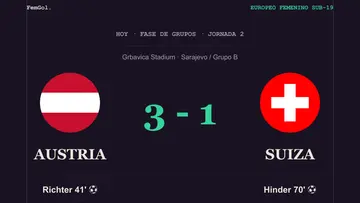
They beat Iceland, defeated Switzerland and secured qualification before their final match against Spain. Prior to this tournament, Austria had never progressed beyond the group stage of a Women’s Under-19 EURO, while no Austrian women’s youth team had ever reached a European semi-final.
Their seven goals in the tournament have been scored by seven different players. Their presence cannot be explained by one prolific forward, but by a team that has found answers across the pitch.
Austria lost to Spain in their final group match, but were still level at half-time, struck the post and forced the champions to protect their advantage until the end.
Germany also defeated them comfortably at the 2016 and 2023 final tournaments. The history of the fixture offers few reasons to make Austria favourites. It does, however, give them a freedom Germany do not possess: they have reached a place they have never been before and have no reputation to defend.
A final that could show where the tournament is heading
A Spain–Germany final would bring together two teams with 13 titles between them. It would also repeat the 2023 final, which Spain won on penalties after 120 goalless minutes.
Victory for Sweden would return them to the final for the first time since they lifted the trophy in 2015. An Austrian win would complete the greatest run in their history and place a country that had never previously progressed beyond the group stage in the final.
Every youth tournament should force Spain to begin again. Players grow older, leave the age group and make way for others who have yet to win anything. Spain have turned that compulsory turnover into a relay: one generation leaves with the trophy and the next arrives knowing it is theirs to protect.
That is why what remains at this European Championship is not merely two semi-finals and a final.
It is three matches to discover whether Spain have built another generation of champions, or whether Sweden, Germany or Austria can finally force Spain’s newest generation to learn how to lose.