THE OTHER NATIONAL TEAM · BRAZIL
During the men’s World Cup, FemGol will trace the history of some of the women’s national teams from the countries taking to the pitch. Because a country’s football doesn’t fit in a single team.
Brazil have been out of the World Cup for two weeks.
Norway defeated Carlo Ancelotti’s side 2-1 in New Jersey and eliminated them in the round of 16. The five-star nation once again left the tournament before the semi-finals and will have to wait another four years for the chance to add a sixth.
Brazil’s other national team do not have to wait that long.
On 24 June 2027, the first Women’s World Cup held in South America will begin. Brazil will be there as hosts, taking part in a competition they have never missed but are still yet to win.
Brazil appeared in the first official edition, held in China in 1991, and in all eight that followed. They have finished third, reached a final and fielded some of the most recognisable footballers in the game’s history. They have also dominated their continent like no other national team.
But they do not have a star.
That history is especially paradoxical in a country that built much of its international identity around football. For almost four decades, Brazilian women were forbidden from playing it.
A decree signed by Getúlio Vargas in 1941 prevented women from taking part in sports considered “incompatible with the conditions of their nature”. Football fell within that definition. Matches were cancelled, some were interrupted by the police and players had to keep the game alive outside official structures.
The ban was not repealed until 1979. It took another four years, until 1983, for the National Sports Council to formally regulate the women’s game.
Brazil had already won three men’s World Cups by the time Brazilian women were legally allowed to play football.
The national team played their first international match in July 1986. They lost 2-1 to the United States in the Italian town of Jesolo. Two years later, they travelled to China for an experimental tournament designed to test whether a Women’s World Cup was viable.
The squad was built primarily around players from Radar, in Rio de Janeiro, and Juventus, in Sydney. No kit was designed specifically for them. The footballers travelled with clothing intended for the men’s national team, made for different bodies and different needs.
Wearing kit designed for the men, Brazil finished third.
They defeated Norway, Thailand and the Netherlands, lost to the Norwegians in the semi-finals and beat China on penalties in the third-place play-off. The experiment brought together twelve national teams and helped convince FIFA that a World Cup should exist.
Thirty-eight years later, those footballers received recognition that had taken almost as long to arrive as the tournament itself had taken to reach Brazil. The law enacted on 1 June 2026 to regulate the organisation of the 2027 World Cup also authorised a financial award for the members of the 1988 national team and those who played in the first official World Cup in 1991.
The state that had forbidden them from playing finally recognised its pioneers in law.
Brazil did not progress beyond the group stage at that 1991 World Cup, but they returned for every edition that followed.
The first major breakthrough came in the United States in 1999. Brazil reached the semi-finals, lost to the hosts and defeated Norway on penalties to finish third. Sissi scored seven goals and shared the Golden Boot with China’s Sun Wen. Formiga, then 21 years old, converted the decisive penalty in the third-place play-off.
That generation paved the way for the team that came closest to completing the story.
Brazil won Olympic silver in Athens in 2004 and did so again in Beijing four years later. Between those two finals, they produced the best World Cup campaign in their history.
In China in 2007, Brazil won their first six matches. They conceded only two goals before the final and defeated the United States 4-0 in the semi-finals. Marta scored twice, including one goal after flicking the ball past Tina Ellertson with her heel before finishing with her left foot.
Brazil became the first South American national team to reach a Women’s World Cup final.
Germany defeated them 2-0. Nadine Angerer saved Marta’s penalty while the score was still 1-0 and completed the entire tournament without conceding a goal. Marta finished as both the competition’s leading scorer and best player, but returned home without the trophy.
That defeat has hung over the national team ever since.
Marta became the leading scorer in Women’s World Cup history, with 17 goals. Formiga appeared in seven editions and extended her international career across more than two decades. Cristiane became the all-time leading scorer in the women’s Olympic football tournament. Brazil produced players who changed the scale of the women’s game without any of them managing to lift the title that was missing.
On their own continent, the story has been completely different.
Brazil have won nine of the ten editions of the Women’s Copa América. The only edition they did not win was in 2006, when Argentina were crowned champions. Brazil have reclaimed every title contested since then.
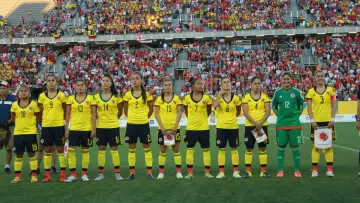
The latest came in 2025, in a final that condensed much of their history into one match. Colombia took the lead three times, Marta rescued Brazil with an added-time equaliser and the game finished 4-4 after extra time. Brazil won the penalty shootout 5-4 and lifted their ninth continental title.
By then, a new era had already begun.
Elimination in the group stage of the 2023 World Cup was one of the hardest blows in the team’s recent history. Brazil defeated Panama 4-0, lost to France and could only draw with Jamaica. Marta left the pitch in tears after a match that, at the time, appeared to have brought her World Cup story to an end.
Arthur Elias took charge a few months later.
Under him, Brazil reached the Olympic final in Paris in 2024. They defeated France for the first time, beat world champions Spain 4-2 and met the United States again in the gold-medal match. Brazil lost 1-0, but secured the third Olympic silver medal in their history and returned to the podium sixteen years after Beijing.
The 2025 Copa América confirmed their recovery.
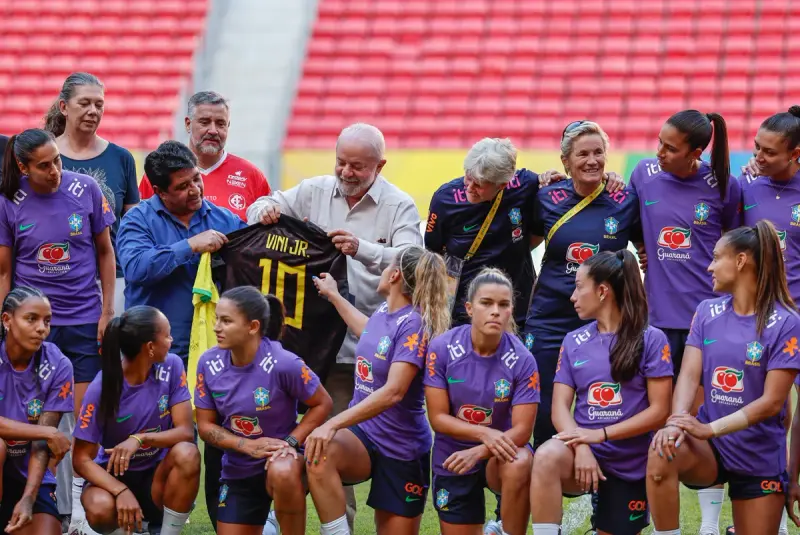
In June 2026, with just over a year remaining before the World Cup, Brazil faced the United States twice more. They won 2-1 in São Paulo and lost 1-0 in Fortaleza in front of 55,744 spectators. Each side won one of the two matches. The public response showed the scale of what lies ahead.
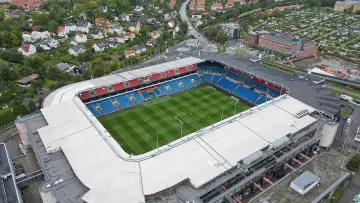
The next World Cup will be held from 24 June to 25 July 2027. Thirty-two national teams will play across eight Brazilian cities. It will be the tenth edition of the tournament and the first organised in South America.
Brazil will enter automatically as hosts, with a generation that has already played in an Olympic final, won a Copa América and shown that it can compete against the best national teams in the world.
They will also arrive carrying the weight of everything that came before.
In 2020, the women’s shirt stopped displaying the five stars won by the men above the crest. Since then, the men’s titles have no longer been carried on the women’s shirts. Any future star will have to be earned by them.
In 1988, they had to travel to China wearing kit handed down from the men’s team.
In 2027, the world will travel to them.
Between those two moments, Brazil have played in every World Cup, dominated South America, reached three Olympic finals and given football some of its greatest figures. The only thing left is to win the tournament they never stopped pursuing.
Their next opportunity will come at home.