THE OTHER NATIONAL TEAM · FRANCE
During the men’s World Cup, FemGol will trace the history of some of the women’s national teams from the countries taking to the pitch. Because a country’s football doesn’t fit in a single team.
France face Spain tonight for a place in the World Cup final.
For Les Bleus, reaching the latter stages has almost become routine. They won the tournament in 2018, reached the final in 2022 and arrive in Dallas with the chance to play in a third consecutive one. Spain are seeking only the second World Cup final in their history. The prize is the same for both: a place in Sunday’s final in New York/New Jersey.
France’s other national team already know where their next World Cup will be played.
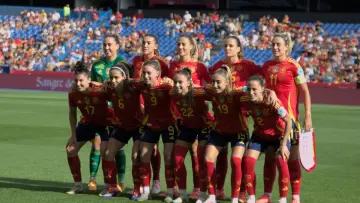
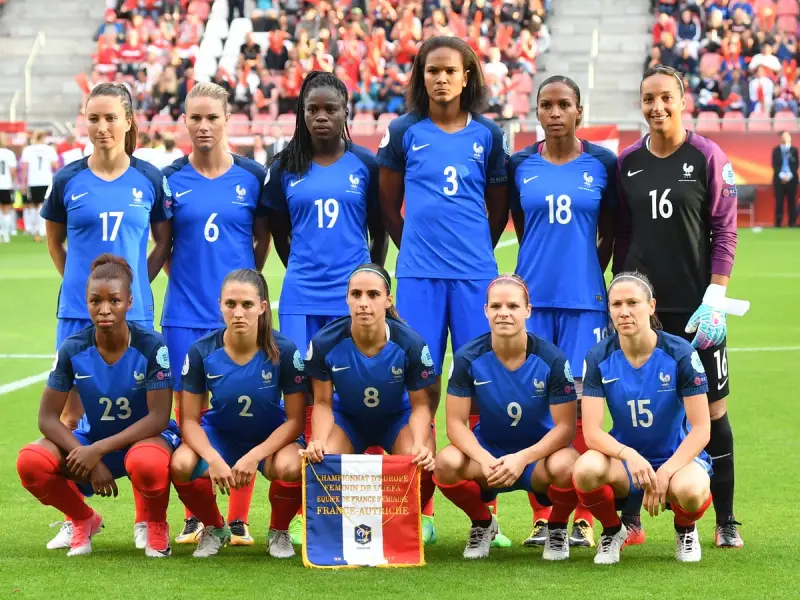
On 9 June, Les Bleues defeated Ireland 1-0 through a Melvine Malard goal, finished top of their group ahead of the Netherlands and secured direct qualification for Brazil 2027. They will once again arrive as one of Europe’s most talented sides, backed by one of the most powerful club systems in the world.
Olympique Lyonnais have won eight European Cups, more than any other team. France have spent decades producing some of the continent’s best footballers and arriving at major tournaments among the contenders.
But that power was not born in Lyon, at Clairefontaine or when the federation decided to invest in it.
The story began before women were allowed to play. It then almost disappeared completely and had to begin again.
France invented women’s football twice.
The first time
The first match played in France between two teams made up entirely of women took place on 30 September 1917.
Both sides belonged to Fémina Sport, a Parisian club created a few years earlier to give women a place in sport. The match was not part of any competition recognised by the French Football Federation.
The players had begun without it.
Alice Milliat became one of the central figures around Fémina Sport, an athlete and administrator who responded to exclusion by building structures of her own. In 1917, she helped establish the Federation of French Women’s Sports Societies and, when the Olympic movement resisted opening its competitions to women, she launched the Women’s World Games.
Football also crossed the Channel.
In 1920, a French team organised around Milliat and Fémina Sport travelled to England to face the Dick, Kerr Ladies, the celebrated side formed by workers at a factory in Preston. They played at stadiums including Deepdale and Stamford Bridge. Months later, the English team visited France in return and toured several cities.
International matches, tours and footballers capable of attracting crowds already existed.
What did not exist was recognition from the institutions that governed the game.
Women’s football gradually lost ground during the 1930s. In 1941, the Vichy regime declared football harmful to women. France had taken part in the birth of the game and then helped make it disappear.
For almost three decades, women’s football ceased to have an organised place within the country.
Until someone needed an attraction for a fair.
The match that was meant to last one afternoon
In 1968, Pierre Geoffroy, a sports journalist at the newspaper L’Union, was looking for an attraction for a fair in Reims.
He placed a small advert in the paper seeking women willing to play a football match. The idea was simple: form two teams, entertain the crowd and stop once the day was over.
The players decided to carry on.
That improvised team became Football Club Féminin de Reims and eventually became part of Stade de Reims. It began playing against the few teams emerging across France and travelling around Europe at a time when the country still had no recognised women’s national side.
In some places, they were not introduced as Stade de Reims.
They were introduced as France.
The club was occupying a space the federation had not yet created.
The French Football Federation officially recognised women’s football in March 1970. When France played their first recognised match a year later, almost all the players came from Reims. Pierre Geoffroy was also the national-team coach.
On 17 April 1971, France defeated the Netherlands 4-0 in Hazebrouck. Jocelyne Ratignier scored three goals. The players themselves did not know that the match would later be recognised as the national team’s first.
They did know what they had achieved when it ended.
The victory earned them a trip to Mexico for the unofficial 1971 World Cup. The women recruited to take part in a fair in Reims ended up playing at the Azteca Stadium.
From Reims to a European power
The first French championship organised by the federation began in the 1974/75 season.
Stade de Reims won the first three editions. Étrœungt, Saint-Maur, Soyaux, Juvisy, Saint-Brieuc and FC Lyon followed: clubs and associations that sustained the competition while the major names of the men’s game were still largely absent from it.
Much of France’s present strength grew from those structures.
In 2004, Olympique Lyonnais took over FC Lyon’s women’s team. The investment, professionalisation and ambition of the new project changed the scale of the European game. Lyon won their first European Cup in 2011 and have lifted eight, as well as reaching twelve finals.
France no longer needed to improvise teams or present a club as though it were the national side.
The country had built a stable domestic competition, a development system capable of producing generations of players and the most successful club in Europe.
But the transformation created another contradiction.
Lyon have dominated the continent. Les Bleues have still never won a World Cup, a European Championship or an Olympic title.
They have reached semi-finals, spent years near the top of the rankings and assembled generations capable of competing against anyone. The final step has always been missing.
Brazil 2027 will offer another opportunity.
France’s present rests on players such as Sakina Karchaoui, Grace Geyoro, Kadidiatou Diani, Marie-Antoinette Katoto, Selma Bacha, Sandy Baltimore and Melvine Malard. They no longer need to prove that they belong among the elite or that the country can produce players and clubs capable of becoming champions.
They need to turn all that strength into success for the national team.
Tonight, the cameras will be trained on Dallas. France and Spain will decide which of the two men’s national teams reaches the World Cup final.
The other France already know they will be in Brazil.
Their story did not begin when Lyon conquered Europe or when the federation finally recognised the women’s game. It began with women who played without permission. The game disappeared when they were told that the sport was not for them and returned thanks to a match that was only supposed to last one afternoon.
France did not discover women’s football when Lyon began to dominate Europe.
By then, French women had already invented it twice.