THE OTHER NATIONAL TEAM · GHANA
During the men’s World Cup, FemGol will trace the history of some of the women’s national teams from the countries taking to the pitch. Because a country’s football doesn’t fit in a single team.
Ghana are out of the World Cup.
Colombia defeated them 1-0 in Kansas City and ended a campaign that had taken the Black Stars through the group stage and into the round of 32.
While the men’s tournament continued without them, Ghana’s other national team were arriving in Morocco. On 29 July, the Black Queens will begin a Women’s Africa Cup of Nations that could take them to Brazil 2027.
They do not need to discover the World Cup. They need to recover a place they occupied before the Black Stars had even made their debut.
Ghana’s first senior World Cup team
The Black Queens made their World Cup debut in the United States in 1999. Ghana’s men would not reach the tournament until Germany 2006.
By then, the women had already played in two editions.
Their most memorable result came in 2003. Alberta Sackey scored twice in a 2-1 victory over Australia, giving Ghana their first win at a senior World Cup. She was the captain and attacking figurehead of a generation that established the country among the strongest teams in Africa.
Ghana reached the African final in 1998, 2002 and 2006. They finished as runners-up each time, unable to convert their consistency into a first continental title, but qualification for the 2007 World Cup completed a run of three consecutive appearances.
That was the last one.
The decline did not happen in a single tournament. Ghana went out in the group stage in 2008 and 2010, failed to qualify in 2012 and returned home early again in 2014. There was a brief recovery when they won bronze in 2016, but hosting the competition two years later did not prevent another group-stage elimination.
They then failed to qualify for the following edition and missed another World Cup cycle. A country once bettered in Africa only by Nigeria watched Cameroon, South Africa, Zambia and Morocco move ahead.
The team began winning again
The reconstruction accelerated when Nora Häuptle took charge in January 2023. The Swiss coach brought several under-20 players into the senior squad, renewed the group and restored a competitive identity.
Ghana qualified for their first WAFCON since 2018 after winning ten of their first eleven matches under Häuptle.
She was no longer in charge when the delayed tournament was eventually played in July 2025, but Kim Lars Björkegren inherited much of the team she had helped rebuild.
The competition did not begin well. Ghana lost 2-0 to South Africa and drew with Mali, leaving qualification in danger. A 4-1 victory over Tanzania changed the campaign.
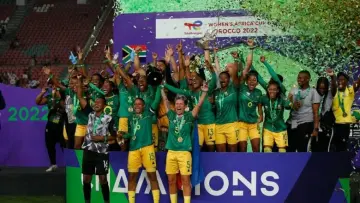
The Black Queens then eliminated Algeria on penalties, took hosts Morocco to another shootout in the semi-finals and defeated South Africa, also on penalties, to win the bronze medal. It was their first place on the WAFCON podium since 2016.
The medal did not solve everything. Three months later, the players refused to train before a qualifier against Egypt while demanding bonuses still owed from the tournament. They eventually returned, played and completed a 7-0 aggregate victory.
The sporting recovery had once again advanced more quickly than the treatment surrounding it.
One knockout tie from Brazil
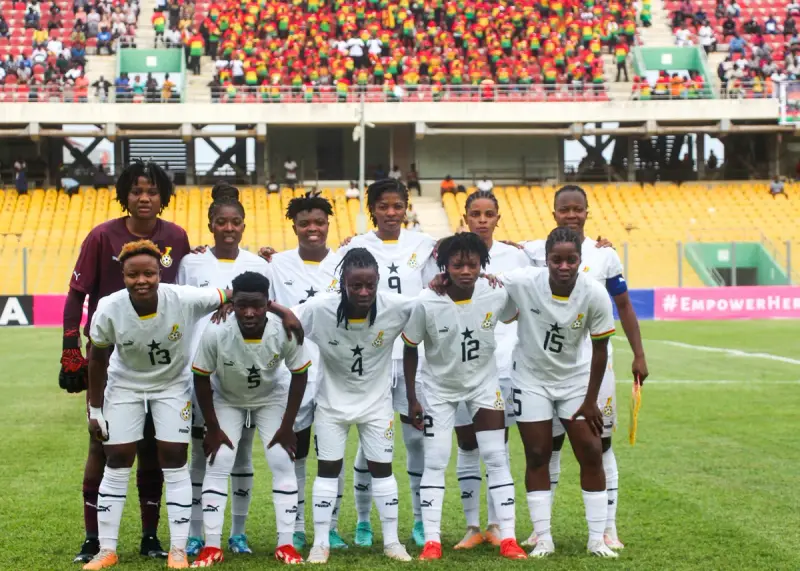
Ghana now return to Morocco with much of the group that won bronze. Captain Portia Boakye remains one of the team’s leaders, alongside Grace Asantewaa, Evelyn Badu and Jennifer Cudjoe. Doris Boaduwaa, Stella Nyamekye and Princella Adubea provide the attacking threat.
The Black Queens will face Cape Verde, Cameroon and Mali in the group stage. The top two teams will reach the quarter-finals, and every semi-finalist will qualify directly for Brazil 2027. The four losing quarter-finalists will still have a route towards the inter-confederation play-offs.
That makes the task unusually clear.
Ghana must survive a difficult group and win one knockout tie to end an absence that will have lasted twenty years by the time the next World Cup begins.
The Black Queens were the first Ghanaian senior team to reach that stage. This summer will decide whether a new generation can stop that achievement from belonging only to the past.