THE OTHER NATIONAL TEAM · SENEGAL
During the men’s World Cup, FemGol will trace the history of some of the women’s national teams from the countries taking to the pitch. Because a country’s football doesn’t fit in a single team.
There’s a line from Mama Diop, striker and captain, that frames Senegal’s moment better than any statistic. After the men’s side won the Africa Cup of Nations, she said that the men’s title pushed the women to aim higher. She didn’t put it as envy, or as a grievance. She said it like someone pointing at a ceiling and warning that she intends to reach it. That, perhaps, is the best way to understand the Lionesses of Teranga: a side that no longer measures itself against the men, but uses their shadow as a springboard.
Because the easy story would be the other one. The usual one. The one about footballers who only get a mention when the men play — named as the flip side, the unpaid debt, the footnote to the important match. Today Senegal are back on the map thanks to the Lions and their duel with France: a recognisable shirt, a powerful identity, a respected generation. And it would be convenient to dispatch the Lionesses in a single line, as an appendix to that party.
But a team isn’t built in the margin of another. It’s built by playing, losing, coming back, and losing again a little closer to the line. And that is exactly what Senegal have been doing for years, at a pace that doesn’t fit into headlines but does fit into a trajectory.
The Lionesses are not a powerhouse. Best to say it early and without dressing it up: they haven’t won an Africa Cup of Nations, they haven’t played a World Cup, they’re not at the centre of any global conversation. Selling them as something they aren’t yet would be a disservice. But looking at them as if they were doing nothing would be a far bigger one.
Written from twelve yards
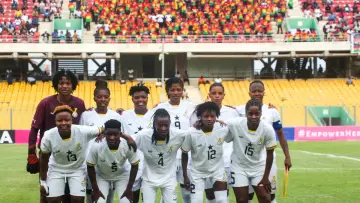
Their recent biography reads best from the penalty spot, because that’s where Senegal have learned who they are. At the 2022 Women’s Africa Cup of Nations they reached the quarter-finals and met Zambia. Nguenar N’Diaye put them ahead in the 61st minute; Avell Chitundu levelled for the Copper Queens, and the match went to a shootout, where Zambia knocked them out. It was no ordinary defeat: it was the first time in a long while that Senegal had forced a World Cup-bound opponent to sweat until the final kick. They had stopped being just passing through.
Three years later, at the WAFCON played in 2025, the Lionesses again slipped into the last eight — and this time their arrival was a door slammed shut. In their opener they swept the Democratic Republic of Congo aside 4-0, with braces from Mama Diop and Nguenar Ndiaye in a devastating first half: the match was settled inside half an hour. CAF called it a statement on the table, and it was.
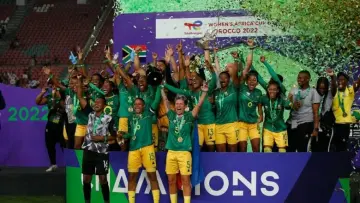
Then came the hard part, which in African football is almost everything else. Zambia, Morocco, South Africa: the whole continent squeezing, ever more physical, more technical, more layered. Senegal didn’t parade through the tournament, they fought it metre by metre, suffered, clung to qualification and ended up crossing paths in the quarter-finals with South Africa, the reigning champions. They held out for 120 goalless minutes. And once again the border appeared where it always does: at twelve yards. South Africa won the shootout 4-1 and went through. Senegal went home without progressing, but having forced a continental champion to settle it from the spot.
The pattern repeated, with a happy ending, on the road to the 2026 Africa Cup of Nations. The ticket was won in a suffocating tie against Ivory Coast: two goalless draws, home and away, and a shootout settled 5-4. No attacking festival, no fireworks. Order, nerve, and a goalkeeper waiting for the right shot. Sometimes growth doesn’t sound like a thrashing; it sounds like a team that doesn’t break when the scoreboard gives it nothing.
Four decisive ties, four penalty shootouts. There’s something almost poetic in a team fighting to enter the conversation having its story written from the cruellest place in football, the one with no middle ground: you go through or you go out, you rule or you wait. Senegal have lost some and won others. But they’ve been there for all of them, and being there is precisely what was denied them for years.
The African football map
It’s worth setting the thermometer in context, because African women’s football is moving fast and waits for no one. Nigeria remain the historic benchmark. South Africa now know what it is to lift the trophy. Zambia have turned their firepower into international presence. Morocco have made investment and structure a motorway of growth. On that map, Senegal don’t yet sit on the throne. But they no longer walk in like a guest asking permission to come through the door.
That’s why a side like this can’t be measured by its honours alone. There are countries where a final stage isn’t a result but a sign that the project is still alive. There are shirts that, when they turn up several tournaments in a row, start to say something different to the girls watching from the sofa: that this football can be theirs too, that the national shirt doesn’t end where the Lions end, that Teranga — the word Senegal has turned into identity, hospitality and pride — can wear a woman’s boots too.
Two worlds, two battles
The gap with France, the Lions’ opponents today, helps explain that we’re talking about two different worlds. The French women’s side has long lived on another scale: elite clubs, recognisable players, a league with tradition and the daily obligation to win. Senegal are at a different stretch of the journey. They aren’t yet battling the glass ceiling of the perennial favourites; they’re battling to widen the floor they stand on. But there’s something powerful about that place, because from there every step weighs double: every qualification counts, every shootout leaves a memory, every match against a champion serves to check whether the body holds and whether the team can look a little higher without losing its balance.
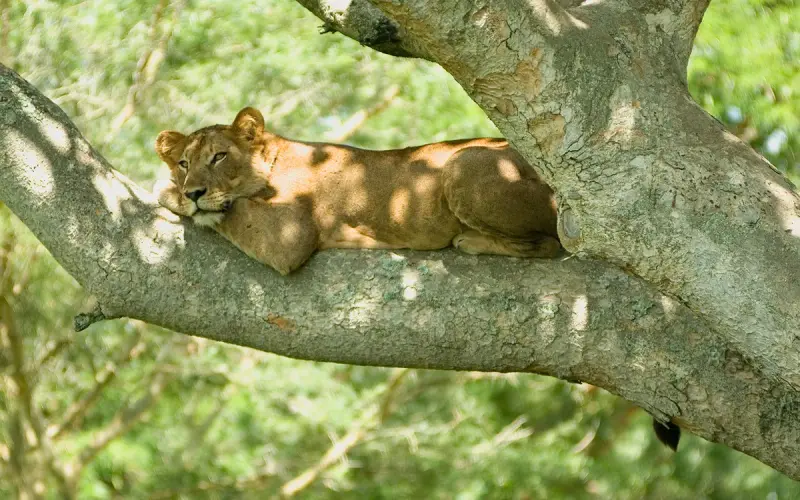
In the wild, the lionesses rule. In football, not yet.
But that “not yet” is the word holding the sentence up. It doesn’t speak of a final defeat, but of a half-built thing, of a space not quite conquered. The Lionesses of Teranga don’t yet roar across the continent. Sometimes they just hold on, sometimes they just wait, sometimes they survive a match that won’t open up or a spotlight that goes out too soon. But they’re still there, repeating themselves, edging closer, aiming at the ceiling their captain marked out.
And in women’s football, still being there is never a small thing.