THE OTHER NATIONAL TEAM · IVORY COAST
During the men’s World Cup, FemGol will trace the history of some of the women’s national teams from the countries taking to the pitch. Because a country’s football doesn’t fit in a single team.
A scoreline can tell you what happened over ninety minutes. The problem starts when it is used to tell you everything that came after.
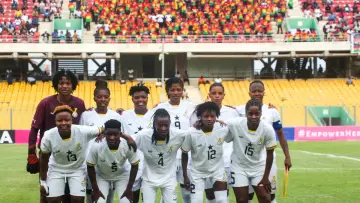
On 7 June 2015, Ivory Coast played the first World Cup match in their history. Waiting for them was Germany, world champions in 2003 and 2007 and ranked number one by FIFA at the start of the tournament. Célia Šašić scored after three minutes. When the final whistle blew, the scoreboard at the stadium in Ottawa read 10–0.
For much of the world, that was the first image of the Ivory Coast women’s national team. For too long, it was also the last.
They didn’t get there by accident
Ivory Coast did not appear at Canada 2015 because someone needed to fill a group.
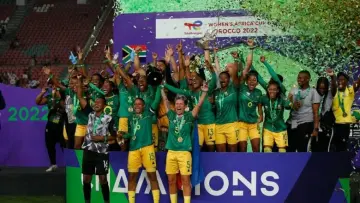
Seven months earlier, they had finished third at the 2014 Women’s Africa Cup of Nations. In the third-place play-off they beat South South Africa to take the last of the three African places at the World Cup. Nigeria and Cameroon finished ahead of them; South Africa, a side that would go on to become continental champions, finished behind. It was the Éléphantes’ first great achievement.
The gap between that team and the major football powers did not close simply because they had earned a ticket. Ivory Coast arrived in Canada ranked 67th in the world, placed in a group with Germany and Norway — two former world champions — alongside fellow debutants Thailand.
The 10–0 was real. So was everything required to be there in the first place.
But heavy defeats have a strange ability to erase what came before. People remember the goals conceded, not the obstacles overcome to earn the right to be on that pitch. A debut becomes a verdict, and a sporting gap becomes a supposed explanation for an entire country.
Ivory Coast lost all three matches and went home in the group stage. After the opening defeat to Germany, they lost 3–2 to Thailand and 3–1 to Norway. They failed to take a single point, but they scored three goals and showed something very different to what that first afternoon in Ottawa had suggested.
The world, however, had already chosen what to remember. Ten goals weigh more than three.
After the World Cup came the silence
The hardest part was not losing 10–0. The hardest part was disappearing.
Ivory Coast did not return to the Women’s Africa Cup of Nations finals for twelve years. In qualifying for the 2018 edition, they drew 2–2 against Mali in Abidjan and 0–0 in the second leg. They were eliminated on the away goals rule, losing their chance to fight for a place at the 2019 Women’s World Cup in France as well.
Their first World Cup appearance had not been the beginning of a lasting presence. It had been a brief window.
While other African sides grew, professionalised their structures or found generations capable of competing internationally, the Éléphantes stopped appearing at major tournaments. The 10–0 remained available in the archives. The day-to-day work, the players who kept trying and the clubs sustaining women’s football in Ivory Coast were far less visible.
Until the country began finding its way back through a different door.
The club got there before the national team
In November 2025, ASEC Mimosas reached the final of the CAF Women’s Champions League.
The Ivorian club faced Morocco’s AS FAR, one of the continent’s leading projects. They fell behind, drew level in the second half through Ami Prisca Diallo, and only conceded the match when Zineb Redouani converted a penalty in the 85th minute to make it 2–1.
ASEC did not lift the trophy, but their run proved something important: in Ivory Coast, a foundation capable of competing with Africa’s elite had been rebuilt.
Several of those players went on to form the core of the national team. Among them was Ami Diallo, scorer of ASEC’s goal in the continental final and one of three finalists for the CAF Women’s Interclub Player of the Year 2025. The experience ASEC had accumulated gave the national team something that cannot be built through training camps alone: players accustomed to competing in international matches, managing knockout ties and handling pressure.
The revival of a national team almost never begins on the day it returns to a major tournament. It begins much earlier, at the clubs that send their players ready.
A qualification that needs explaining
Ivory Coast did not initially secure their place at the 2026 Women’s Africa Cup of Nations either.
In the final qualifying round they faced Senegal. Both matches ended 0–0 and the tie was decided on penalties. Senegal won the shoot-out 5–4. After twelve years waiting to return, the Éléphantes were out by a single kick.
Then the tournament changed.
The Confederation of African Football expanded the finals from twelve to sixteen teams and awarded the four new places to the highest-ranked eliminated sides in the FIFA rankings. Ivory Coast were among those reinstated.
It would be wrong to dress this up: the qualification was not won on the pitch.
But it would equally be wrong to present it as an arbitrary decision. There was a pre-existing, objective criterion, and Ivory Coast’s standing in the international rankings allowed them to benefit from the expansion. It was a second chance, not an exoneration.
Ami Diallo summed up the situation in two words: humility and determination.
The squad knows it arrives having first been eliminated. It also knows that twelve lost years will not be returned if they approach the tournament as mere guests.
A manager who already knows the way
The rebuild is being led by Reynald Pedros.
The Ivorian Football Federation appointed him in January 2025 to succeed Clémentine Touré, who had managed the team for thirteen years. Pedros had won two UEFA Women’s Champions Leagues with Olympique Lyonnais and guided Morocco through their recent transformation: runners-up in Africa in 2022 and through to the round of sixteen at the 2023 Women’s World Cup in their first appearance at the tournament.
Ivory Coast did not hire him simply to organise a squad. They hired him because he had already taken an African national team from reconstruction to the biggest stages.
In April, the Éléphantes hosted one of the groups of the inaugural FIFA Women’s Series in Abidjan. They beat Mauritania 8–0, Turks and Caicos Islands 15–1 and Pakistan 2–0 to finish the competition with three wins from three.
Those results do not indicate how the team will respond against the best sides in Africa. The gulf between Ivory Coast and some of their opponents in that competition was too wide to draw firm conclusions.
What they do confirm is something else: Ivory Coast are playing again, coming together again, competing in front of their own supporters again, and giving the country’s girls a national team that exists in the present tense.
For years there was only a memory. Now there are matches again.
Morocco as the gateway to Brazil
The Women’s Africa Cup of Nations will be held in Morocco between 25 July and 16 August 2026. Ivory Coast have been drawn in Group B alongside South Africa, Burkina Faso and Tanzania. The top two sides in each group advance to the quarter-finals.
The tournament will also determine Africa’s representation at the 2027 Women’s World Cup in Brazil. The four semi-finalists will qualify directly. The sides knocked out in the quarter-finals will contest two additional play-off ties to decide which two countries go into the intercontinental play-off tournament.
To return to the World Cup, the Éléphantes need to finish among Africa’s four best sides or survive the play-off route.
It is no small task.
South Africa represent one of the continent’s most established projects. Burkina Faso and Tanzania arrive with the same opportunity to turn the tournament’s expansion into a historic leap. Beyond the group stage wait Nigeria, Morocco, Zambia, Ghana and Cameroon.
Ivory Coast do not go in as favourites. They were not favourites in 2014 either, when they beat South Africa and earned that first World Cup place.
What remains after a 10–0
Germany and Ivory Coast face each other today at a World Cup, this time in the men’s tournament.
The coincidence inevitably brings back that scoreline from Ottawa. Football has a long memory, but it does not always choose well what to hold on to.
It should remember the 10–0. It should also remember that Ivory Coast had finished third in Africa to get there. That after conceding ten goals they scored two in the next match. That they spent twelve years away from the main continental competition. That they lost their 2025 qualifying tie without conceding a single goal. That an Ivorian club reached the African Women’s Champions League final. That a new generation is now preparing to fight for a place in Brazil.
A heavy defeat can be part of a national team’s story. What it cannot do is end it.
Eleven years on, Ivory Coast are still trying to change the last image the world holds of them. Not to erase that 10–0. To put something after it.
A return. A Women’s Africa Cup of Nations. Perhaps another World Cup.
Because the scoreline was the end of that match. It was never meant to be the end of the Éléphantes.