The Women’s Africa Cup of Nations has one clear favourite, but no obvious order behind them.
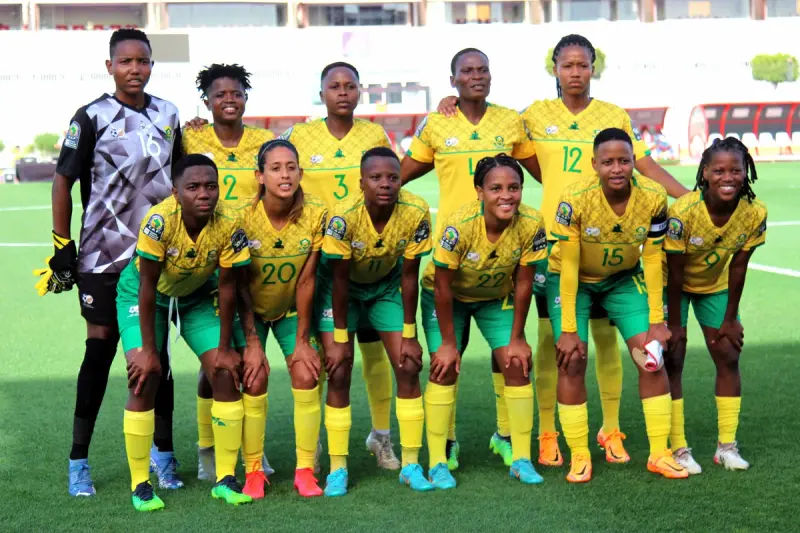
South Africa won the title in 2022, have not missed an edition since making their debut in 1995 and retain much of the core that took them to the top of African football. They start as clear favourites ahead of Ivory Coast, Burkina Faso and Tanzania, three nations that have never lifted the trophy.
That does not mean their route will be straightforward.
Banyana Banyana finished fourth at the previous edition, needed an added-time goal from Thembi Kgatlana to overcome the Democratic Republic of Congo in qualifying and will open against a Tanzania side that held them to a draw in 2024.
There is no reserved second place behind them. Ivory Coast return under Reynald Pedros with a new generation; Burkina Faso won all four of their qualifying matches; and Tanzania secured their place without losing any of theirs.
Only the top two teams will reach the quarter-finals. The group begins in Casablanca on Monday and could start taking shape that same afternoon.
South Africa: bringing Kgatlana back to reclaim the title
South Africa do not need to prove that they belong among Africa’s elite. They need to prove that they can still dominate it.
Desiree Ellis experienced South Africa’s early years at the top of the continental game as a player. From the dugout, she then led the team to the 2018 final and delivered the first African title in their history in 2022. Two years later, Nigeria ended their title defence in the semi-finals and Banyana Banyana finished fourth.
Their attempt to reclaim the title begins with the return of Thembi Kgatlana.
The forward missed the previous edition on a personal leave of absence agreed with the federation, not through injury. She is now back to lead an attack that no longer includes the retired Jermaine Seoposenwe, but still features Hildah Magaia and several new options.
The final 26-player squad also retains a familiar structure around Andile Dlamini, Bambanani Mbane, Refiloe Jane, Linda Motlhalo and Lebohang Ramalepe. There is enough experience for the objective to be the title again, rather than simply qualification for the World Cup.
Their preparations have shown both sides of the team. South Africa lost 5-0 to Japan in the first of their June friendlies, then defeated the same opponents 1-0 three days later.
There could hardly be a clearer warning for the rest of the group: Banyana Banyana can suffer when they lose control, but they also possess the experience and quality to respond quickly.
Tanzania will discover which version appears in the opening match.
Ivory Coast: returning after being eliminated
Ivory Coast are back at the Women’s Africa Cup of Nations for the first time since 2014.
Their most recent appearance ended with a third-place finish, the best result in their history. It was followed by a twelve-year absence that looked set to continue when Senegal eliminated them in the final qualifying round.
Both matches ended goalless before Senegal won the penalty shootout 5-4. Ivory Coast were out.
Eight days after qualifying had concluded, CAF expanded the tournament from twelve to sixteen teams and awarded the four additional places to the highest-ranked eliminated sides in the FIFA ranking. Ivory Coast received one of them.
Their route into the tournament was unexpected, but they have enough quality to justify their place among the contenders.
Reynald Pedros has been in charge since January 2025. The former Morocco coach and Champions League winner with Olympique Lyonnais has attempted to build a team that is more composed in possession and better prepared to press immediately after losing the ball.
Ivory Coast do, however, travel without Habibou Ouédraogo. The ASEC Mimosas forward was named the best player in the 2025 African Women’s Champions League and scored 39 goals in the Ivorian league, but has been left out of the squad for administrative reasons. Her absence shifts the attacking burden onto Ami Diallo, her club-mate at ASEC and a finalist for the continent’s interclub player of the year.
Ivory Coast also arrive after winning their final friendly. Following a defeat against Ghana, they beat Mali 1-0 through a goal from Grâce Ruth Sery and protected the lead during a second half in which Mali applied greater pressure.
On paper, they are the leading candidates to accompany South Africa into the quarter-finals. Their opening match against Burkina Faso will demand immediate proof.
Burkina Faso: four wins to secure their return
Burkina Faso did not need an expansion to return to the tournament.
They defeated Burundi twice —0-1 and 4-1— before beating Togo in both legs of the next round —2-0 and 0-1—. Four matches, four victories, eight goals scored and only one conceded.
That represents a significant difference from their debut in 2022. They arrived then without tournament experience, lost narrowly to Morocco and Senegal and earned their first point with a 2-2 draw against Uganda.
One of the goals in that match was scored by Adama Congo, the first Burkinabè player to score at a Women’s Africa Cup of Nations and one of the main attacking threats in Pascal Sawadogo’s side.
Their preparations have also ended with a convincing victory. Burkina Faso defeated FUS Rabat 5-0 in a friendly played on Wednesday.
The level of opposition cannot be compared directly with what awaits them in the tournament, but the result gives confidence to a side that will need to take its chances. Against South Africa, they are likely to spend long periods without the ball. Against Ivory Coast and Tanzania, however, they will have to show that they can also take the initiative.
Their objective is simple to express and difficult to achieve: reach the knockout stage for the first time.
Tanzania: the draw South Africa still remember
Tanzania have never reached the quarter-finals either.
They competed in 2010, returned in 2024 and exited at the group stage on both occasions. Their most recent tournament nevertheless produced a result that explains why South Africa cannot treat the opening match as a formality.
The Twiga Stars held the reigning African champions to a 1-1 draw.
The goal was headed in by captain Opah Clement. Clara Luvanga, who arrived at that tournament injured, is now the team’s main attacking reference. The Al-Nassr forward comes into the tournament after scoring 18 goals and providing two assists in the Saudi league.
Bakari Shime knows the generation at his disposal well. Before returning to the senior team, he coached the under-17 and under-20 sides and led Tanzania to the 2022 Under-17 Women’s World Cup. Several members of that squad now form part of the Twiga Stars’ core.
Their qualifying campaign also confirmed their progress. Tanzania defeated Equatorial Guinea 4-2 on aggregate and won both matches against Ethiopia. They completed their preparations with a goalless draw against Ghana, another team competing at this Women’s Africa Cup of Nations.
Tanzania still begin as the fourth favourites because of their relative lack of experience and squad depth. But they have already shown that they can frustrate South Africa and possess a forward capable of exploiting any space.
Two matches that could upset the expected order
South Africa and Tanzania will open the group at 18:00 on Monday.
The match revisits their 1-1 draw from the previous edition, but the circumstances have changed. Banyana Banyana have Kgatlana back, while Tanzania arrive with a more mature generation. A South African victory would confirm the expected order. Another setback would open the group completely.
Three hours later, Ivory Coast and Burkina Faso will play the first direct meeting between the two leading candidates to capitalise on any mistake by the favourites.
The Ivorians have greater individual experience and begin from a stronger position. Burkina Faso arrive after winning every qualifying match and know that defeat would leave them needing a result against South Africa.
The group has one clear candidate to finish first. Everything else will have to be settled on the pitch.
Group B fixtures (Morocco local time)
Monday, 27 July
South Africa v Tanzania, 18:00 Ivory Coast v Burkina Faso, 21:00
Friday, 31 July
South Africa v Ivory Coast, 18:00 Burkina Faso v Tanzania, 21:00
Tuesday, 4 August
Burkina Faso v South Africa, 21:00 Tanzania v Ivory Coast, 21:00
All Group B matches will be played in Casablanca.