Under-19 tournaments always speak in the future tense.
The players who have yet to make the front pages, the ones just beginning to appear in senior squads, the names that in a few years’ time it will seem impossible not to have known before.
But for two weeks, they will not be prospects.
They will be the protagonists of the 2026 Women’s Under-19 EURO.
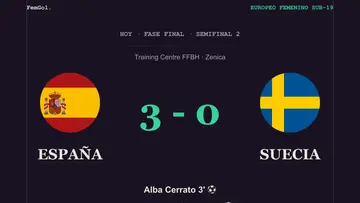
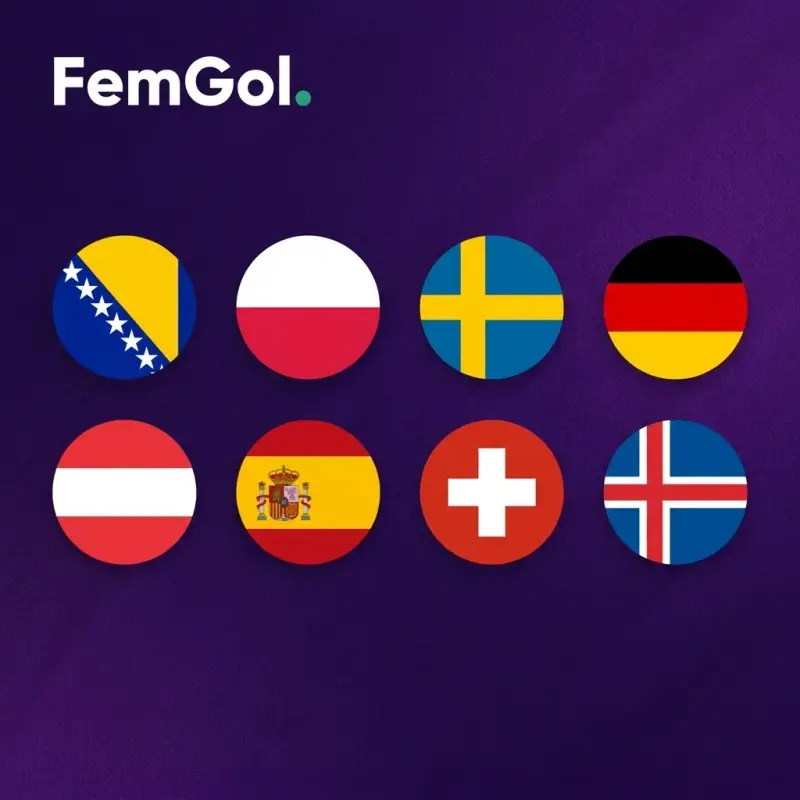
Bosnia and Herzegovina will bring together eight nations between 27 June and 10 July across Sarajevo and Zenica. Spain arrive as winners of the last four editions and the leading force in a competition that also welcomes Germany back, receives the hosts for the first time and offers a new opportunity to see where European women’s football is heading.
It will not be a huge tournament. There will be barely fifteen matches.
Perhaps that is why every single one matters so much.
Eight teams and very little margin
The format offers no time to correct too many mistakes.
The eight teams are divided into two groups of four. Each side plays three matches and only the top two advance to the semi-finals. There are no quarter-finals, no additional round to protect the favourites.
Three matches to stay.
Three matches to go home.
The semi-finals will be played on 7 July and the final three days later at Grbavica Stadium in Sarajevo. The competition is spread across four venues: the Asim Ferhatović Hase and Grbavica in Sarajevo; Bilino Polje and the Bosnian federation’s training centre in Zenica.
Bosnia and Herzegovina hosted the Women’s Under-17 EURO in 2022, but have never played in a Women’s Under-19 final tournament. This time they will not only be the hosts. They will also have a team to follow.
Group A: history, a host nation and a Poland that no longer surprises
Bosnia and Herzegovina, Poland, Sweden and Germany.
Group A brings together two former champions, a team in full growth and a host nation facing the biggest tournament in their history at this level.
Germany return after failing to qualify in 2025. For years they were the dominant force in this competition: six titles between 2000 and 2011, four more final appearances as runners-up. Their absence last year was an anomaly they will now try to correct. Their path to qualification was not straightforward either: they lost to Spain in the first round before recovering in the decisive phase and sealing their return with wins that included a victory over France.
Sweden also know the way to the title. They were champions in 1999, 2012 and 2015 and are qualifying in consecutive years for the first time since lifting that last trophy.
The team that could upset the group’s historical reading is Poland.
Last year they played the EURO on home soil and were eliminated in the group stage. This time they have qualified on merit, and they have done so without conceding a single goal throughout. They have also shown they can beat Sweden: they defeated them in the first qualifying round of this edition and won 5-0 against them at the 2025 EURO.
Poland do not yet have the trophy cabinet of Germany or Sweden, but they can no longer be treated as a secondary guest.
Bosnia and Herzegovina will start with less experience, though with the emotional and environmental advantage of playing at home. Their first match is against Germany: an unforgiving way to introduce themselves to Europe.
Group B: Spain against the history they themselves have written
Austria, Spain, Switzerland and Iceland.
Spain do not arrive merely to defend a title.
They arrive to defend four.
The Spanish side have won every edition played since the end of the pandemic: 2022, 2023, 2024 and 2025. No team had previously won four consecutive editions of the Women’s Under-19 EURO (a reflection of the academy structure we analyse in the hidden treasure). Their record stands at seven titles in total, one more than Germany.
Their group rivals arrive by different routes and none of them need carry the weight of expectation that comes with the trophy.
Switzerland return to a final tournament for the first time since hosting in 2018. They won all three matches in the decisive qualifying round with Emanuela Pfister as their attacking reference and sealed their place with a 2-0 win over England.
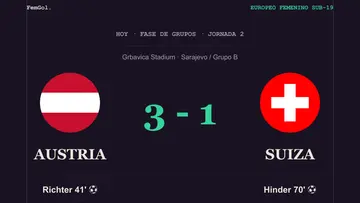
Spain’s first match will be against Switzerland, on Sunday 28 June in Sarajevo.
Iceland will be playing in their fourth final tournament. Their qualification came down to a tight group in which they edged Denmark on points: they drew with Finland, came from behind to win 3-2 against the Danes and finished with a 3-0 victory over Serbia.
Austria needed a more unusual route: they lost their first match in the decisive round but eventually qualified after a three-way tie was settled on head-to-head goal difference. They have never made it past the group stage, but the format turns any side capable of winning one match into an immediate threat.
Spain have more history, more titles and more recent experience.
That does not earn them a single point before kick-off.
Spain’s full schedule
The holders open on Sunday 28 June against Switzerland in Sarajevo, before moving to Zenica for the remainder of the group stage.
- 28 June: Switzerland vs Spain (Sarajevo)
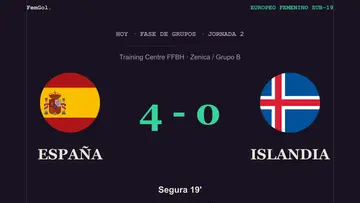
- 1 July: Spain vs Iceland (Zenica)
- 4 July: Spain vs Austria (Zenica)
- 7 July: Semi-finals
- 10 July: Final (Sarajevo)
Both matches in the third round of each group will kick off simultaneously to prevent any team from competing with prior knowledge of the result they need.
In Spain, the tournament will be available on RTVE Play. UEFA will also stream matches for free on UEFA.tv in selected territories.
A tournament that should not be seen merely as a showcase
The easiest way to present a Women’s Under-19 EURO is to call it a tournament of rising stars.
That is not wrong, but it falls short.
Some of these players have already made their senior debuts. Others are competing in professional leagues, training with first teams or have had to learn from a young age to manage expectations that used to arrive much later in a career. Women’s football has accelerated. So has the transition between youth and elite level.
That is why this EURO is not simply about guessing who will eventually make the senior squad. It also offers a chance to observe which countries are producing more players, which models are being replicated, which leagues are giving young players minutes and what distance remains between the major structures and the federations still trying to reach them.
Bosnia will debut in front of their own supporters. Poland will look to prove their growth did not depend on hosting the previous tournament. Germany will want to reclaim a competition they once felt was their own. Sweden will aim to be more than a team with history. Switzerland, Iceland and Austria will try to make the most of a group where almost every gaze will be fixed on Spain. And Spain will pursue something no one has managed before: five consecutive Women’s Under-19 EURO titles.
The future of European women’s football plays in Bosnia.
And it starts on 27 June.