THE OTHER NATIONAL TEAM · CROATIA
During the men’s World Cup, FemGol will trace the history of some of the women’s national teams from the countries taking to the pitch. Because a country’s football doesn’t fit in a single team.
Croatia are already out of the World Cup. Portugal ended their campaign in the round of 32, bringing the most successful period in the country’s football history to a close. Zlatko Dalić stepped down after leading Croatia to the 2018 final, third place in 2022 and another World Cup appearance in 2026.
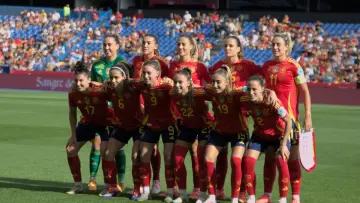
The country’s other national team was also born after independence. Croatia’s women played their first international in 1993, but have never qualified for a World Cup or European Championship.
The two teams shared a country, a federation and a shirt.
They did not share the same pathway.
The Croatian model did not extend to girls
The men’s success was not simply the product of one exceptional generation. Croatia developed a network of clubs, coaches and competitions capable of identifying talent and preparing players for stronger leagues abroad.
For decades, there was no equivalent structure in the women’s game.
The top division has existed since 1992, but there was no complete pathway leading towards it. There were few players, few clubs and limited national youth competition. A girl could play football, but her chances depended too heavily on where she was born and whether one of the few clubs able to welcome her was nearby.
Croatia began addressing that gap in 2020 by creating national under-15 and under-17 girls’ leagues. The first players to grow up within that new system are now beginning to reach the senior national team.
This is not yet a generation capable of competing with Europe’s strongest sides. It is, however, one that has been able to follow a clearer pathway than those before it.
The play-offs do not hide the gap
Qualifying for the 2027 World Cup has offered an early sign of progress.
Croatia won five of their six matches against Kosovo, Bulgaria and Gibraltar. They finished level with Kosovo on 15 points and reached the play-offs as one of the two best runners-up in League C.
That record needs context. Croatia met the obligation to win almost every match, but did not top a group far removed from the European elite. They even struggled to secure a 0–1 victory away to Gibraltar.
They will face Iceland in October. Their opponents played in League A and have appeared at five European Championships. The first leg will take place in Croatia, with the return fixture in Iceland. If Croatia cause an upset, they will still have to overcome Portugal or Northern Ireland in a second play-off round.
Reaching the play-offs does not mean Croatia are close to the World Cup.
It gives them a chance to discover how far away they remain.
The targets are still the foundations
In May, the Croatian Football Federation presented its strategy for 2026–2030. The document carries a deliberately uncomfortable title: Women (Don’t) Belong in Football.
Its targets include increasing the number of registered female players to more than 4,000, establishing under-13 competitions in every region, reducing the number of players who leave the game after turning 18 and consolidating a stable eight-club top division. It also aims to develop more female coaches and give the women’s game greater visibility.
This is not the plan of a country completing its transformation. It is the plan of one still laying the foundations.
The difference between the two national teams cannot be explained by a special ability among Croatian male players. They had clubs, competitions and pathways capable of turning talent into performance. Many girls never even had the opportunity to discover whether they possessed that talent.
Iceland may eliminate Croatia in October and leave them outside another major tournament. That would be the expected outcome. Real change will not depend solely on one play-off, but on whether the girls starting to play today find a structure that did not exist before.
Croatia have already shown that a small country can build a great national team.
Now they must make sure that knowledge belongs to their women too.